Julkaisut

Tieteellinen lehti:

Finnish Journal of eHealth and eWelfare (FinJeHeW), http://www.finjehew.fi

FinJeHeW on Suomen Telelääketieteen ja eHealth-seuran ja Sosiaali- ja terveydenhuollon tietojenkäsittely-yhdistyksen yhteisesti vuodesta 2009 alkaen julkaisema tieteellinen lehti. Lehti kuuluu julkaisufoorumi-luokkaan 1. Lehden ISSN-tunnus on 1798-0798.

FinJeHeW ottaa vastaan tieteellisiä artikkeleita sekä muuta aineistoa sosiaali- ja terveydenhuollon informaatioteknologiasta, telelääketieteestä ja eHealth-alalta. Kirjoitusohjeet ovat lehden sivustolla. Lehti on pääasiassa suomenkielinen, mutta siinä on artikkeleita, niiden tiivistelmiä ja muuta aineistoa englanniksi. Lehti noudattaa käsikirjoitusten arvioinnissa kahden refereen menettelyä. Lehti ilmestyy ainakin neljä numeroa vuodessa verkkojulkaisuna pdf-muodossa. Lehden kukin numero on vapaasti saatavissa verkosta www.finjehew.fi.

« Kaikki julkaisut

Tieteelliset artikkelit

Kyvykkäille käyttäjille fiksut järjestelmät? Sairaanhoitajien arviot potilastietojärjestelmistä 2017 fi

Smart systems for capable users? Nurses’ experiences on patient information systems 2017 en

Hyppönen, Hannele; Lääveri, Tinja; Hahtela, Nina; Suutarla, Anna; Sillanpää, Kirsi; Kinnunen, Ulla-Mari; Ahonen, Outi; Rajalahti, Elina; Kaipio, Johanna; Heponiemi, Tarja; Saranto, Kaija

Vol 10 Nro 1 (2018)s. 30-59doi: 10.23996/fjhw.65363Open Access

Tiivistelmä

Terveydenhuollon ammattilaisten kokemuksia potilastietojärjestelmistään on maailmanlaajuisesti kartoitettu vähän, vaikka käyttäjäkokemukset ovat keskeinen osa järjestelmien kehitystä ja arviointia. Sairaanhoitajien kokemusten valtakunnallinen kartoitus tehtiin ensimmäistä kertaa Suomessa alkuvuodesta 2017. Kohteena olivat työikäiset sairaanhoitajat, terveydenhoitajat ja kätilöt Sairaanhoitajaliiton ja Tehyn jäsenrekisteristä. Vastaava tutkimus on tehty lääkäreille vuosina 2010, 2014 ja 2017. Menetelmänä oli lääkärikyselyn pohjalta muokattu sähköinen kyselylomake, jonka Sairaanhoitajaliitto ja Tehy lähettivät jäsenilleen.

Yhteensä 3607 sairaanhoitajaa vastasi kyselyyn. Vastaukset ryhmiteltiin Sote-tieto hyötykäyttöön -strategian aihealueen ”Kyvykkäille käyttäjille fiksut järjestelmät” tavoitteiden mukaisiin osa-alueisiin. Kaikissa osa-alueissa todettiin eroja sekä potilastietojärjestelmien tuotemerkkien että vastaajien toimintaympäristöjen välillä. Yksi keskeisimpiä korjattavista ongelmista oli saman asian kirjaaminen moneen paikkaan. Sen voidaan katsoa altistavan virheille ja osoittavan huonosti onnistunutta tietojärjestelmäintegraatiota. Kehittämiskohteiksi nousivat myös tietojärjestelmien käyttökatkot, jotka on aiemmassa kirjallisuudessa todettu riskiksi potilasturvallisuudelle. Tutkimuksessa löytyi eroja tuotemerkkien välillä tietojärjestelmien käytettävyydessä ja potilaan hoidossa tarvittavan, ajantasaisen ja laadukkaan tiedon saamisessa paikallisesti, alueellisesti ja kansallisesti. Vastaajat kokivat tietojärjestelmien edellyttämien toimintatapojen muutosten käyttökoulutuksen riittämättömäksi. Tietojärjestelmien kehittämistyöhön aktiivisesti osallistuvat antoivat muita paremman kouluarvosanan tietojärjestelmälleen. Tätä selvitetään tarkemmin erillisessä artikkelissa.

Osallistuminen tietojärjestelmien kehittämistyöhön ja koulutus vievät alkuun aikaa asiakas- ja potilastyöltä, mutta hyvän käytettävyyden ja käyttötaidon voidaan myöhemmin odottaa säästävän ammattilaisten aikaa tietojärjestelmien käytöltä suoraan asiakas- ja potilastyöhön. Tunnistetut erot potilastietojärjestelmien käytettävyydessä ja tuessa työlle sekä hoidon laadulle auttavat tunnistamaan hyviä käytäntöjä eri toimintaympäristöissä sairaanhoitajan ajankäytön tehostamiseksi ja potilasturvallisuuden ja yhteistyön lisäämiseksi. Sairaanhoitajia on kuultava paremmin tietojärjestelmiä kehitettäessä. Organisaatioiden on syytä suunnitella tietojärjestelmäkoulutukset niin, että ammattilaisten osaaminen pysyy ajan tasalla tietojärjestelmien ja niiden käyttötapojen kehittyessä. Myös sairaanhoitajaliiton sähköisten terveyspalveluiden strategia korostaa digiosaamista ja kehitystyöhön osallistumista.

Abstract (English)

Globally, there are only a few studies on healthcare professionals' experiences of their patient information systems, although user experiences are a key component of system development and assessment. A nationwide survey of nurses' experiences was conducted for the first time in Finland in early 2017. The survey was targeted to working-age nurses, community nurses and midwives from the Membership Registers of the Nursing Association and the Tehy. A similar study has been conducted for physicians in 2010, 2014 and 2017. An electronic questionnaire, based on the physicians’ questionnaire, was sent by the Nursing Association and Tehy to their members.

A total of 3607 nurses responded to the questionnaire. The results were grouped using the objectives of the Finnish eHealth and eSocial 2020 Strategy theme "Smart Systems for Capable Users". Responses differed by patient information system brands and by the respondents' operating environments. One of the most prominent problems was the need to record the same thing in many places, which can expose to errors and indicates poor information system integration. Poor stability of information systems was also identified as a common problem; identified as a risk to patient safety in previous literature. There were differences between brands in usability of information systems and availability of up-to-date and high quality information in patient care locally, regionally and nationally. Respondents felt that in-service training was inadequate with regard to changes in operating methods required by information systems. Active user participation in the development of information systems was associated with better school grades given by the respondent for the information system. This will be studied in more detail in a separate article.

Participation in the development of information systems and training take initially time from direct customer and patient work, but good usability and usage skills can later be expected to save time due to fluent use of information systems. The system and context specific differences in the information system usability and support to work as well as quality of care identified in this study can be used to pinpoint good design practices in different contexts of use. This is needed to improve efficiency of the nurses’ work and to increase patient safety and co-operation. Nurses need to be better consulted when developing information systems. Organizations need to design information system training so that the skills of the professionals remain up to date as information systems and their usage patterns evolve. The Nursing Association's e-Health Strategy also emphasizes the user eHealth competence and participation in development work.

Avainsanat

sairaanhoitajat [http://www.yso.fi/onto/yso/p8452]tietojärjestelmät [http://www.yso.fi/onto/yso/p3927]käytettävyys [http://www.yso.fi/onto/yso/p3785]käyttäjäkokemus [http://www.yso.fi/onto/yso/p25337]potilastietojärjestelmät [http://www.yso.fi/onto/yso/p28119]

Kanoninen lähde ja PDF: journal.fi. Tätä artikkelia ei ole kopioitu tälle palvelimelle.
Lisenssi: https://creativecommons.org/licenses/by-nc-nd/4.0

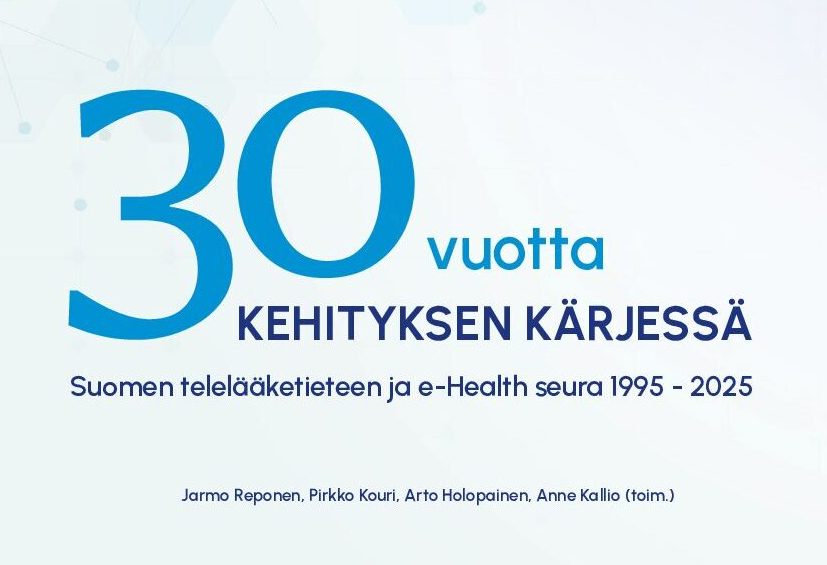
Seuran 30-vuotishistoriikki

30 VUOTTA KEHITYKSEN KÄRJESSÄ – Suomen telelääketieteen ja e-Health seura 1995-2025,  2025,
ISBN 978-952-65791-1-5 (PDF)

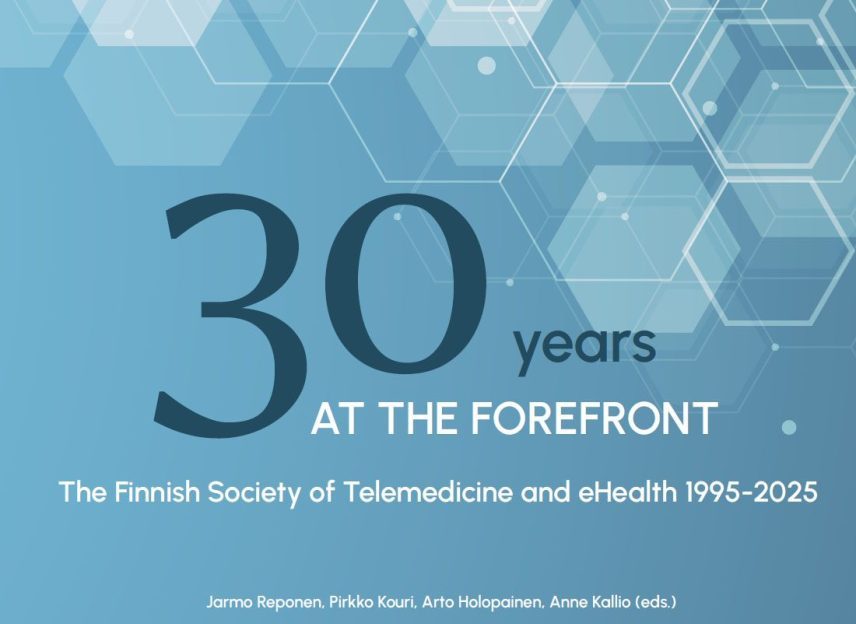
The Society’s 30-Year History

30 Years at the Forefront – The Finnish Society of Telemedicine and eHealth 1995-2025, 2025.
ISBN: 978-952-65791-5-3 (pdf)

Podcastit:

Suomen Telelääketieteen ja e-Health seura · Podcast

eHealth & Telemedicine Today – by STeHS

What’s happening in digital healthcare right now? In this podcast, STeHS brings you conversations on telemedicine, eHealth, and the evolving healthcare landscape—featuring voices from Finland and beyond.

Jakso 3 · 13.6.2026 · 33 min

Innovaatiot ja yrittäjyys suomalaisessa eHealthissa

This episode was recorded live at the eHealth2025 Conference, part of the 30th anniversary of the Finnish Society of Telemedicine and eHealth (STeHS). Hosts of this podcast are Titta Venho and Anna Saranlinna.In this discussion, Kalevi Virta, CEO of eWell Oy, and Arto Holopainen, Innovation Director at the City of Kuopio, share their perspectives on the development of the Finnish eHealth ecosystem, with a particular focus on innovation, entrepreneurship, and collaboration.The conversation explores how digital health has evolved in Finland over the past decades, highlighting key milestones such as mobile technologies, national digital health services, and international collaboration. The speakers reflect on the opportunities and challenges faced by startups and innovators in the health technology sector, including funding, regulation, and access to real-world testing environments.The episode also discusses the role of cities, ecosystems, and collaborative networks in supporting innovation, as well as the importance of early user engagement and cross-sector partnerships. Looking ahead, the discussion touches on future trends such as artificial intelligence, data-driven services, and the increasing demand for sustainable and scalable digital health solutions.Finally, the guests share practical advice for entrepreneurs and emphasize the need for stronger strategic leadership, long-term investment, and continued cooperation between public and private sectors to drive meaningful impact in healthcare.Note: This episode is in Finnish.Full transcript is available in https://www.telemedicine.fi/julkaisut/
Spotifyssa
Jakso 2 · 6.6.2026 · 32 min

Vaikuttavuus digitaalisissa terveyspalveluissa

This episode was recorded live at the eHealth2025 Conference, part of the 30th anniversary of the Finnish Society of Telemedicine and eHealth (STeHS). Hosts of this podcast are Titta Venho and Anna Saranlinna.In this discussion, Mika Perttu, Director of Digital Transformation at the City of Helsinki’s Social, Health and Rescue Division, and Minna Saranpää, Customer Manager and Social and Healthcare Specialist at Vivago Oy, explore the topic of impact and effectiveness in digital health and care services.As digitalisation continues to reshape how healthcare services are delivered, used, and evaluated, the conversation focuses on how to ensure that digital solutions truly create value for patients, professionals, and society. The speakers discuss how effectiveness can be defined, measured, and integrated into service development and decision-making.The episode highlights practical examples from both public and private sectors, addressing challenges such as fragmented systems, limited resources, and the need for better data-driven leadership. It also explores the future role of digital tools, including artificial intelligence and remote care, in improving outcomes and enabling more proactive and personalised healthcare services.Note: This episode is in Finnish.Full transcript is available: https://www.telemedicine.fi/julkaisut/
Spotifyssa
Jakso 1 · 31.5.2026 · 27 min

Women around the world in health care digitalisation

This episode was recorded live at the eHealth2025 Conference, part of the 30th anniversary of the Finnish Society of Telemedicine and eHealth (STeHS). Hosts of this podcast are Titta Venho and Anna Saranlinna.In this discussion, Dr Michelle Griffith, President of ISfTeH, a physician specializing in internal, lifestyle, and integrative medicine with over 30 years of clinical experience, and Professor Pirkko Kouri, Vice President of ISfTeH and a Finnish expert in health informatics and digital health education, explore the theme Women Around the World in Healthcare Digitalisation.Together, they reflect on how gender shapes the development, leadership, and use of digital health services across different cultural and global contexts. The conversation highlights both the challenges women face in technology-driven environments and the critical role they play in designing more inclusive, holistic healthcare solutions.The episode also offers insights into international collaboration, leadership experiences, and practical advice for women aiming to make an impact in the rapidly evolving field of telemedicine and eHealth.Full transcript will be available in: https://www.telemedicine.fi/julkaisut/

Spotifyssa

Jaksot päivittyvät tälle sivulle automaattisesti. Kaikki jaksot myös Spotifyssa.

Konferenssijulkaisut:

  • XXXI Kansallinen ja kansainvälinen Telelääketieteen ja eHealth konferenssi, #eHealth2026: Effective digital solutions in health care and social welfare services, 2026, ISBN 978-952-65791-4-6 (PDF) 
  • XXX Kansallinen telelääketieteen ja eHealth seminaari, #eHealth2025: Strengthening Interoperability and Equality in Digital Health with Nordic Innovations, 2025, ISBN 978-952-65791-3-9 (PDF)
  • XXIX Kansallinen telelääketieteen ja eHealth seminaari, #eHealth2024: From Research to Impact on Digital Health and Welfare Services, 2024, ISBN 978-952-69224-9-2 (PDF)
  • XXVIII Kansallinen telelääketieteen ja eHealth seminaari, #eHealth2023: Human oriented approach in eHealth and digital services, 2023, ISBN 978-952-69224-8-5 (pdf)
  • XXVII Kansallinen telelääketieteen ja eHealth seminaari, #eHealth2022: Digital Health – from Research to Applied Solutions, 2022, ISBN 978-952-69224-6-1 (PDF)
  • XXVI Kansallinen telelääketieteen ja eHealth seminaari, #eHealth2021: eHealth in a Lifecycle, 2021, ISBN: 978-952-69224-4-7 (pdf)
  • XXV Kansallinen telelääketieteen ja eHealth seminaari, eHealth2020: From Dream to Reality, 2020, ISBN: 978-952-69224-2-3 (pdf)
  • XXIV Kansallinen telelääketieteen ja eHealth seminaari, eHealth2019: Data-Driven Health, 2019, ISBN: 978-952-68112-9-1 (pdf)
  • XXIII Kansallinen telelääketieteen ja eHealth seminaari, eHealth2018: Health communities facing cyber transformation, 2018, ISBN: 978-952-68112-8-4 (pdf)
  • XXII Kansallinen telelääketieteen ja eHealth seminaari: Win-Win-Win, voittaako kansalainen, ammattilainen ja yhteiskunta?, 2017, ISBN: 978-952-68112-6-0 (pdf)
  • XXI Kansallinen telelääketieteen ja eHealth seminaari, Nordic eHealth2016 Kokeilukulttuuri ja digitalisaatio, 2016, ISBN: 978-952-68112-4-6 (pdf)
  • XX Kansallinen telelääketieteen ja eHealth seminaari: eHealth, muutoksen moottori, 2015, ISBN: 978-952-68112-2-2 (pdf)
  • XIX Kansallinen telelääketieteen ja eHealth seminaari: Matkalla vaikuttavaan eTerveyteen, 2014, ISBN: 978-952-67213-9-2 (pdf)
  • XVIII Kansallinen telelääketieteen ja eHealth seminaari: Teknologiatalkoilla parempiin hoitotuloksiin, 2013, ISBN: 978-952-67213-8-5 (pdf)
  • XVII Kansallinen telelääketieteen ja eHealth seminaari: Tietoa tarpeeseen, 2012, ISBN: 978-952-67213-6-1 (pdf)
  • XVI Kansallinen telelääketieteen ja eHealth seminaari: Maalta maailmalle – Aluemalli terveyspalveluiden kehittämisessä, 2011, ISBN: 978-952-67213-4-7 (pdf)
  • XV Kansallinen telelääketieteen ja eHealth seminaari: Katse yli rajojen, 2010, ISBN: 978-952-67213-2-3 (pdf)
  • XIV Kansallinen telelääketieteen ja eHealth seminaari: Terveyttä verkosta ja verkostosta, 2009, ISBN: 978-952-67213-0-9 (pdf)
  • XIII Kansallinen telelääketieteen ja eHealth seminaari: e-Health kansalaisen palveluksessa, 2008 (pdf)
Scroll to Top