Julkaisut

Tieteellinen lehti:

Finnish Journal of eHealth and eWelfare (FinJeHeW), http://www.finjehew.fi

FinJeHeW on Suomen Telelääketieteen ja eHealth-seuran ja Sosiaali- ja terveydenhuollon tietojenkäsittely-yhdistyksen yhteisesti vuodesta 2009 alkaen julkaisema tieteellinen lehti. Lehti kuuluu julkaisufoorumi-luokkaan 1. Lehden ISSN-tunnus on 1798-0798.

FinJeHeW ottaa vastaan tieteellisiä artikkeleita sekä muuta aineistoa sosiaali- ja terveydenhuollon informaatioteknologiasta, telelääketieteestä ja eHealth-alalta. Kirjoitusohjeet ovat lehden sivustolla. Lehti on pääasiassa suomenkielinen, mutta siinä on artikkeleita, niiden tiivistelmiä ja muuta aineistoa englanniksi. Lehti noudattaa käsikirjoitusten arvioinnissa kahden refereen menettelyä. Lehti ilmestyy ainakin neljä numeroa vuodessa verkkojulkaisuna pdf-muodossa. Lehden kukin numero on vapaasti saatavissa verkosta www.finjehew.fi.

« Kaikki julkaisut

Tieteelliset artikkelit

Kuntoutuksen ammattilaisten näkemyksiä tekoälyn hyödyntämisestä työssään fi

Äijö, Marja; Kansanen, Mari; Karikumpu, Venla; Vehko, Tuulikki; Kinnunen, Ulla-Mari; Jylhä, Virpi

Vol 17 Nro 4 (2025)s. 487–500doi: 10.23996/fjhw.162566Open Access

Tiivistelmä

Tekoälyn integroiminen osaksi sosiaali- ja terveydenhuollon kuntoutuspalveluja korostuu palvelujärjestelmän digitalisaatiossa. Tekoäly mahdollistaa yksilöllisemmän hoidon, resurssien tehokkaamman kohdentamisen sekä päätöksenteon tueksi tarvittavan tiedon analysoinnin. Käyttöönotto edellyttää rakenteellisia uudistuksia, henkilöstön osaamisen kehittämistä sekä eettisten ja tietoturvanäkökulmien huomiointia. Tämän laadullisen tutkimuksen tarkoituksena oli tutkia kuntoutuksen ammattilaisten näkemyksiä tekoälyn hyödyntämismahdollisuuksista tulevaisuuden kuntoutustyössä.

Aineistonkeruu toteutettiin vapaaehtoisuuteen perustuvana kyselynä, osana laajempaa tutkimuskyselyä, maalis–huhtikuussa 2025 kuntoutuksen ammattilaisille, joiden sähköpostiosoitteet olivat saatavilla kahdeksassa alan ammattijärjestössä. Poikkileikkausaineisto rajattiin tekoälyn hyödyntämismahdollisuuksia kartoittavan avoimen kysymyksen vastauksiin (n = 146; N = 432). Vastaajat olivat ammattikorkeakoulun suorittaneita fysioterapeutteja (n = 43), toimintaterapeutteja (n = 45) sekä muita kuntoutuksen ammattilaisia (n = 58), kuten puheterapeutteja ja kuntoutuksen ohjaajia. Aineiston analysoinnissa hyödynnettiin induktiivista sisällönanalyysiä, joka toteutettiin päällekkäisissä vaiheissa.

Tekoälyn arvioitiin voitavan käyttää kuntoutusprosessissa asiakkaan ohjaamisessa, kuntoutustarpeen arvioinnissa ja kuntoutuksen suunnittelussa, sekä räätälöimässä ja tuottamassa kuntoutusharjoitteita. Toiseksi tekoälyn odotettiin tuovan tukea asiakastyöhön. Vastaajat nostivat esille eri käyttötapoja, joissa tekoäly toimisi ammattilaisten tukena kirjaamisessa, tiedon etsimisessä ja jäsentämisessä. Kolmanneksi osa vastaajista ilmaisi, ettei osaa arvioida tekoälyn hyötyjä tai ei tunne sitä riittävästi. Vastaajat toivat esiin huolia tietoturvasta ja eettisyydestä. Osa vastaajista koki tekoälyn soveltumattomaksi asiakastyöhön, mutta osa kertoi kiinnostuksesta ja tekoälyn kokeilukäytöstä.

Vastaajat toivovat tekoälyn yhdistävän hajanaista tietoa eri lähteistä ja esittävän tietoa jäsennellysti. Vastaajien mielestä tekoälyllä voisi olla merkittävä potentiaali ajan ja resurssien hallinnassa. Tekoälyn käytöstä ollaan kiinnostuneita, mutta sen hyödyntäminen edellyttää selkeitä pelisääntöjä, koulutusta ja luottamusta järjestelmiin.

Abstract (English)

The integration of artificial intelligence (AI) into rehabilitation services is becoming increasingly emphasized as part of the digital transformation of the social and healthcare services. AI offers opportunities for more personalized care, more efficient allocation of resources, and the analysis of data to support decision-making. However, successful implementation requires structural reforms, the development of staff competencies, and careful consideration of ethical and data security issues.

The aim of this qualitative study was to explore rehabilitation professionals’ perspectives on the potential use of AI in future rehabilitation work. Data were collected through a voluntary survey conducted in March–April 2025. The target group consisted of rehabilitation professionals whose email addresses were available through eight professional associations in the field. The cross-sectional dataset was limited to responses to an open-ended question regarding the potential uses of AI (n = 146; N = 432). Respondents included physiotherapists (n = 43), occupational therapists (n = 45), and other rehabilitation professionals (n = 58), such as speech therapists and rehabilitation counsellors, all of whom held a university of applied sciences degree. The data were analyzed using inductive content analysis, conducted in overlapping phases.

AI was seen as potentially useful in various stages of the rehabilitation process, including client guidance, needs assessment, planning, and the customization and delivery of rehabilitation exercises. Additionally, AI was expected to support client work by assisting professionals with documentation, information retrieval, and data structuring. Some respondents indicated that they were not familiar enough with AI to assess its benefits. Concerns were raised about data security and ethical implications. While some professionals considered AI unsuitable for client work, others expressed interest and reported experimenting with its use.

Respondents hoped that AI could integrate fragmented data from various sources and present it in a structured manner. They also saw significant potential for AI in managing time and resources. Although there is interest in adopting AI, its effective use requires clear guidelines, training, and trust in the systems.

Avainsanat

kyselytutkimuskvalitatiivinen tutkimuskuntoutustekoäly

Kanoninen lähde ja PDF: journal.fi. Tätä artikkelia ei ole kopioitu tälle palvelimelle.
Lisenssi: https://creativecommons.org/licenses/by/4.0

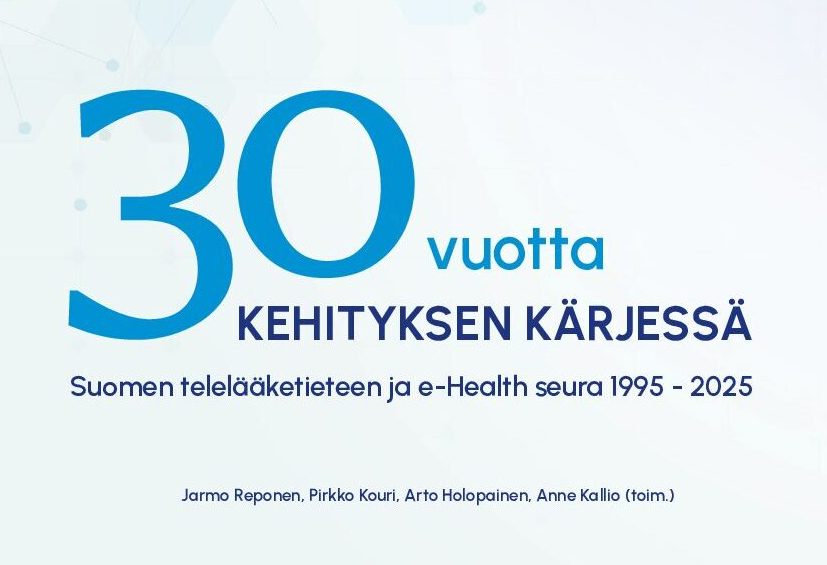
Seuran 30-vuotishistoriikki

30 VUOTTA KEHITYKSEN KÄRJESSÄ – Suomen telelääketieteen ja e-Health seura 1995-2025,  2025,
ISBN 978-952-65791-1-5 (PDF)

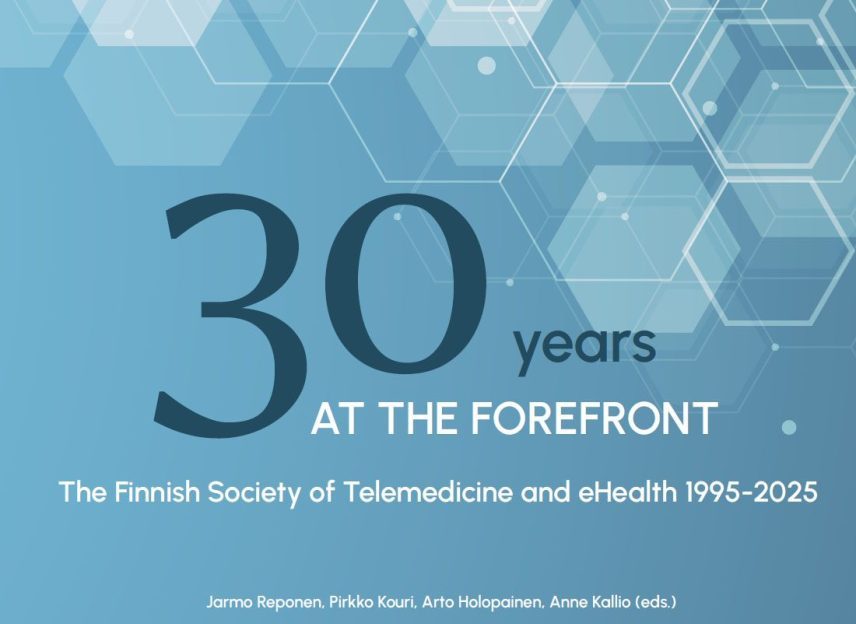
The Society’s 30-Year History

30 Years at the Forefront – The Finnish Society of Telemedicine and eHealth 1995-2025, 2025.
ISBN: 978-952-65791-5-3 (pdf)

Podcastit:

Suomen Telelääketieteen ja e-Health seura · Podcast

eHealth & Telemedicine Today – by STeHS

What’s happening in digital healthcare right now? In this podcast, STeHS brings you conversations on telemedicine, eHealth, and the evolving healthcare landscape—featuring voices from Finland and beyond.

Jakso 3 · 13.6.2026 · 33 min

Innovaatiot ja yrittäjyys suomalaisessa eHealthissa

This episode was recorded live at the eHealth2025 Conference, part of the 30th anniversary of the Finnish Society of Telemedicine and eHealth (STeHS). Hosts of this podcast are Titta Venho and Anna Saranlinna.In this discussion, Kalevi Virta, CEO of eWell Oy, and Arto Holopainen, Innovation Director at the City of Kuopio, share their perspectives on the development of the Finnish eHealth ecosystem, with a particular focus on innovation, entrepreneurship, and collaboration.The conversation explores how digital health has evolved in Finland over the past decades, highlighting key milestones such as mobile technologies, national digital health services, and international collaboration. The speakers reflect on the opportunities and challenges faced by startups and innovators in the health technology sector, including funding, regulation, and access to real-world testing environments.The episode also discusses the role of cities, ecosystems, and collaborative networks in supporting innovation, as well as the importance of early user engagement and cross-sector partnerships. Looking ahead, the discussion touches on future trends such as artificial intelligence, data-driven services, and the increasing demand for sustainable and scalable digital health solutions.Finally, the guests share practical advice for entrepreneurs and emphasize the need for stronger strategic leadership, long-term investment, and continued cooperation between public and private sectors to drive meaningful impact in healthcare.Note: This episode is in Finnish.Full transcript is available in https://www.telemedicine.fi/julkaisut/
Spotifyssa
Jakso 2 · 6.6.2026 · 32 min

Vaikuttavuus digitaalisissa terveyspalveluissa

This episode was recorded live at the eHealth2025 Conference, part of the 30th anniversary of the Finnish Society of Telemedicine and eHealth (STeHS). Hosts of this podcast are Titta Venho and Anna Saranlinna.In this discussion, Mika Perttu, Director of Digital Transformation at the City of Helsinki’s Social, Health and Rescue Division, and Minna Saranpää, Customer Manager and Social and Healthcare Specialist at Vivago Oy, explore the topic of impact and effectiveness in digital health and care services.As digitalisation continues to reshape how healthcare services are delivered, used, and evaluated, the conversation focuses on how to ensure that digital solutions truly create value for patients, professionals, and society. The speakers discuss how effectiveness can be defined, measured, and integrated into service development and decision-making.The episode highlights practical examples from both public and private sectors, addressing challenges such as fragmented systems, limited resources, and the need for better data-driven leadership. It also explores the future role of digital tools, including artificial intelligence and remote care, in improving outcomes and enabling more proactive and personalised healthcare services.Note: This episode is in Finnish.Full transcript is available: https://www.telemedicine.fi/julkaisut/
Spotifyssa
Jakso 1 · 31.5.2026 · 27 min

Women around the world in health care digitalisation

This episode was recorded live at the eHealth2025 Conference, part of the 30th anniversary of the Finnish Society of Telemedicine and eHealth (STeHS). Hosts of this podcast are Titta Venho and Anna Saranlinna.In this discussion, Dr Michelle Griffith, President of ISfTeH, a physician specializing in internal, lifestyle, and integrative medicine with over 30 years of clinical experience, and Professor Pirkko Kouri, Vice President of ISfTeH and a Finnish expert in health informatics and digital health education, explore the theme Women Around the World in Healthcare Digitalisation.Together, they reflect on how gender shapes the development, leadership, and use of digital health services across different cultural and global contexts. The conversation highlights both the challenges women face in technology-driven environments and the critical role they play in designing more inclusive, holistic healthcare solutions.The episode also offers insights into international collaboration, leadership experiences, and practical advice for women aiming to make an impact in the rapidly evolving field of telemedicine and eHealth.Full transcript will be available in: https://www.telemedicine.fi/julkaisut/

Spotifyssa

Jaksot päivittyvät tälle sivulle automaattisesti. Kaikki jaksot myös Spotifyssa.

Konferenssijulkaisut:

  • XXXI Kansallinen ja kansainvälinen Telelääketieteen ja eHealth konferenssi, #eHealth2026: Effective digital solutions in health care and social welfare services, 2026, ISBN 978-952-65791-4-6 (PDF) 
  • XXX Kansallinen telelääketieteen ja eHealth seminaari, #eHealth2025: Strengthening Interoperability and Equality in Digital Health with Nordic Innovations, 2025, ISBN 978-952-65791-3-9 (PDF)
  • XXIX Kansallinen telelääketieteen ja eHealth seminaari, #eHealth2024: From Research to Impact on Digital Health and Welfare Services, 2024, ISBN 978-952-69224-9-2 (PDF)
  • XXVIII Kansallinen telelääketieteen ja eHealth seminaari, #eHealth2023: Human oriented approach in eHealth and digital services, 2023, ISBN 978-952-69224-8-5 (pdf)
  • XXVII Kansallinen telelääketieteen ja eHealth seminaari, #eHealth2022: Digital Health – from Research to Applied Solutions, 2022, ISBN 978-952-69224-6-1 (PDF)
  • XXVI Kansallinen telelääketieteen ja eHealth seminaari, #eHealth2021: eHealth in a Lifecycle, 2021, ISBN: 978-952-69224-4-7 (pdf)
  • XXV Kansallinen telelääketieteen ja eHealth seminaari, eHealth2020: From Dream to Reality, 2020, ISBN: 978-952-69224-2-3 (pdf)
  • XXIV Kansallinen telelääketieteen ja eHealth seminaari, eHealth2019: Data-Driven Health, 2019, ISBN: 978-952-68112-9-1 (pdf)
  • XXIII Kansallinen telelääketieteen ja eHealth seminaari, eHealth2018: Health communities facing cyber transformation, 2018, ISBN: 978-952-68112-8-4 (pdf)
  • XXII Kansallinen telelääketieteen ja eHealth seminaari: Win-Win-Win, voittaako kansalainen, ammattilainen ja yhteiskunta?, 2017, ISBN: 978-952-68112-6-0 (pdf)
  • XXI Kansallinen telelääketieteen ja eHealth seminaari, Nordic eHealth2016 Kokeilukulttuuri ja digitalisaatio, 2016, ISBN: 978-952-68112-4-6 (pdf)
  • XX Kansallinen telelääketieteen ja eHealth seminaari: eHealth, muutoksen moottori, 2015, ISBN: 978-952-68112-2-2 (pdf)
  • XIX Kansallinen telelääketieteen ja eHealth seminaari: Matkalla vaikuttavaan eTerveyteen, 2014, ISBN: 978-952-67213-9-2 (pdf)
  • XVIII Kansallinen telelääketieteen ja eHealth seminaari: Teknologiatalkoilla parempiin hoitotuloksiin, 2013, ISBN: 978-952-67213-8-5 (pdf)
  • XVII Kansallinen telelääketieteen ja eHealth seminaari: Tietoa tarpeeseen, 2012, ISBN: 978-952-67213-6-1 (pdf)
  • XVI Kansallinen telelääketieteen ja eHealth seminaari: Maalta maailmalle – Aluemalli terveyspalveluiden kehittämisessä, 2011, ISBN: 978-952-67213-4-7 (pdf)
  • XV Kansallinen telelääketieteen ja eHealth seminaari: Katse yli rajojen, 2010, ISBN: 978-952-67213-2-3 (pdf)
  • XIV Kansallinen telelääketieteen ja eHealth seminaari: Terveyttä verkosta ja verkostosta, 2009, ISBN: 978-952-67213-0-9 (pdf)
  • XIII Kansallinen telelääketieteen ja eHealth seminaari: e-Health kansalaisen palveluksessa, 2008 (pdf)
Scroll to Top