Julkaisut
Tieteellinen lehti:
Finnish Journal of eHealth and eWelfare (FinJeHeW), http://www.finjehew.fi
FinJeHeW on Suomen Telelääketieteen ja eHealth-seuran ja Sosiaali- ja terveydenhuollon tietojenkäsittely-yhdistyksen yhteisesti vuodesta 2009 alkaen julkaisema tieteellinen lehti. Lehti kuuluu julkaisufoorumi-luokkaan 1. Lehden ISSN-tunnus on 1798-0798.
FinJeHeW ottaa vastaan tieteellisiä artikkeleita sekä muuta aineistoa sosiaali- ja terveydenhuollon informaatioteknologiasta, telelääketieteestä ja eHealth-alalta. Kirjoitusohjeet ovat lehden sivustolla. Lehti on pääasiassa suomenkielinen, mutta siinä on artikkeleita, niiden tiivistelmiä ja muuta aineistoa englanniksi. Lehti noudattaa käsikirjoitusten arvioinnissa kahden refereen menettelyä. Lehti ilmestyy ainakin neljä numeroa vuodessa verkkojulkaisuna pdf-muodossa. Lehden kukin numero on vapaasti saatavissa verkosta www.finjehew.fi.
Lähihoitajien kokemukset asiakas- ja potilastietojärjestelmien tuesta työtehtäviin – poikkileikkaustutkimus fi
Practical nurses’ experiences of client and patient information systems support for performance - cross-sectional study en
Saranto, Kaija; Ikonen, Johanna; Koponen, Samuli; Kyytsönen, Maiju; Kinnunen, Ulla-Mari; Vehko, Tuulikki
Tiivistelmä
Asiakas- ja potilastietojärjestelmien tarjoamaa tukea sosiaali- ja terveydenhuollon työtehtävien suorittamiseen on tutkittu lääkärien, sairaanhoitajien ja sosiaalialan korkeakoulutettujen keskuudessa. Lähihoitajille suunnattu tutkimus on jatkumo näille kyselytutkimuksille. Tutkimustehtävinä oli, miten asiakas- ja potilastietojärjestelmät tukevat lähihoitajien työtehtäviä, yhteistyötä ja tiedonkulkua sekä miten hyödylliseksi lähihoitajat arvioivat nämä tietojärjestelmät työssään. Sähköinen kysely välitettiin Suomen lähi- ja perushoitajaliitto SuPer ry:n ja Julkisten ja hyvinvointialojen liitto JHL:n jäsenrekisterissä oleville työikäisille lähihoitajille keväällä 2022. Aineistosta laskettiin keskiarvoja ja prosenttiosuuksia.
Kyselyyn vastasi 3 866 lähihoitajaa kaikilta hyvinvointialueilta. Vastaajien keski-ikä oli 49 vuotta ja 92,9 % puhui äidinkielenään suomea. Suurin osa lähihoitajista työskenteli sosiaalihuollossa. Kolmanneksella (27,9 %) oli yli 20 vuoden työkokemus. Lähihoitajat arvioivat olevansa kokeneita tietojärjestelmien käyttäjiä ja he kokivat tietojärjestelmät pääasiassa työtään tukeviksi. He kuitenkin raportoivat puutteita tietojärjestelmien yhteenvetonäkymissä. Selvitettäessä tietojärjestelmiin liitettyjä hyötyjä puolet (50‒64 %) lähihoitajista eri toimintaympäristöissä raportoi tietojärjestelmien auttavan heitä turvaamaan hoidon jatkuvuuden. Keskeisenä ongelmana nähtiin, että tietojärjestelmien käyttö vie liian ison osan työajasta asiakkaiden kanssa.
Tietojärjestelmät tukivat tiedonvaihtoa omassa organisaatiossa, mutta tiedonvaihdossa sosiaali- ja terveydenhuollon organisaatioiden välillä oli haasteita. Tietojärjestelmien tuki tiedonvaihtoon asiakkaiden tai heidän omaistensa välillä oli heikkoa. Tietojärjestelmien lisäksi tiedonvaihtoon käytettiin puhelinta tai papereita viikoittain. Aluetietojärjestelmät tai Kanta-palvelut eivät olleet lähihoitajien työssä tavallinen tiedonvaihtotapa.
Lähihoitajien arviot tietojärjestelmistä olivat melko positiivisia. Tiedonhaun tuki organisaatioiden välisessä tiedonvaihdossa ja kokemus siitä, että yhteenvetonäkymien tulisi tukea työtä nykyistä enemmän, vahvistivat aikaisempia kyselytutkimuksia. Tietojärjestelmien tuki työlle korostuu nykytilanteessa, jossa henkilöstövaje ja kasvava palveluntarve asettavat haasteita uusille hyvinvointialueille.
Abstract (English)
The support provided by client and patient information systems for the performance of social and health care work tasks has previously been studied among doctors, nurses, and highly qualified social professionals. The research targeted at practical nurses is a continuation of these studies. The research focused on how client and patient information systems support the work, cooperation and flow of information of practical nurses and how useful they assess these information systems in their work.The online survey was forwarded to practical nurses of working age in the register of members of the Finnish Federation of Local and Basic Caregivers (SuPer ry) and the Union of Public and Welfare Sectors (JHL) in spring 2022. Averages and percentages of the material were calculated.
The amount of 3866 practical nurses responded to the electronic survey from all wellbeing services counties and Åland. The average age of respondents was 49 years and the majority of respondents spoke Finnish as their mother tongue (92.9%). Most of the practical nurses worked in social welfare. About one third (27.9%) had more than 20 years of work experience. Practical nurses estimated themselves to be an experienced user of information systems. Half (50-64 %) of practical nurses in different settings reported that information systems help to ensure continuity of care when it comes to identifying the benefits associated with information systems. A key problem was that the use of IT systems takes too much working time from clients.
Practical nurses felt that the information systems mainly supported their work. However, they reported deficiencies in the ability of the information system to produce a summary of the patients’ health status. While information systems supported the exchange of information within their own organisation, there were challenges in the exchange of information between social and healthcare organisations. The support of information systems for the exchange of information between clients or their relatives was poor. In addition to information systems, telephone and papers were used on a weekly basis. Neither the regional information systems nor Kanta services were the usual means of exchanging information in the work of practical nurses.
The assessments of the information systems by practical nurses were rather positive. Support for information-search in the exchange of information between organisations and experience that summaries should be more supportive for work confirmed earlier results from surveys. Information systems’ support for the work is highlighted in the current context were staff shortages and growing service needs pose challenges to new welfare areas.
Avainsanat
Kanoninen lähde ja PDF: journal.fi. Tätä artikkelia ei ole kopioitu tälle palvelimelle.
Lisenssi: https://creativecommons.org/licenses/by/4.0
Seuran 30-vuotishistoriikki
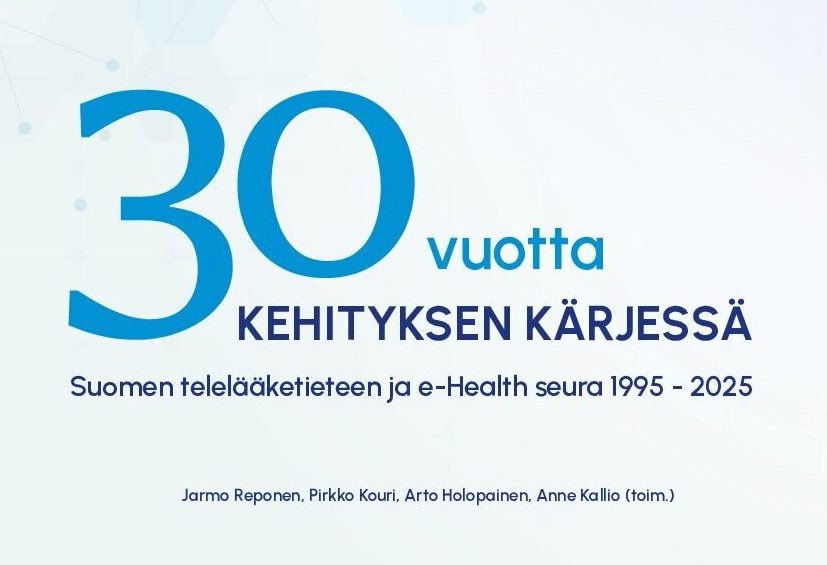
30 VUOTTA KEHITYKSEN KÄRJESSÄ – Suomen telelääketieteen ja e-Health seura 1995-2025, 2025,
ISBN 978-952-65791-1-5 (PDF)
The Society’s 30-Year History
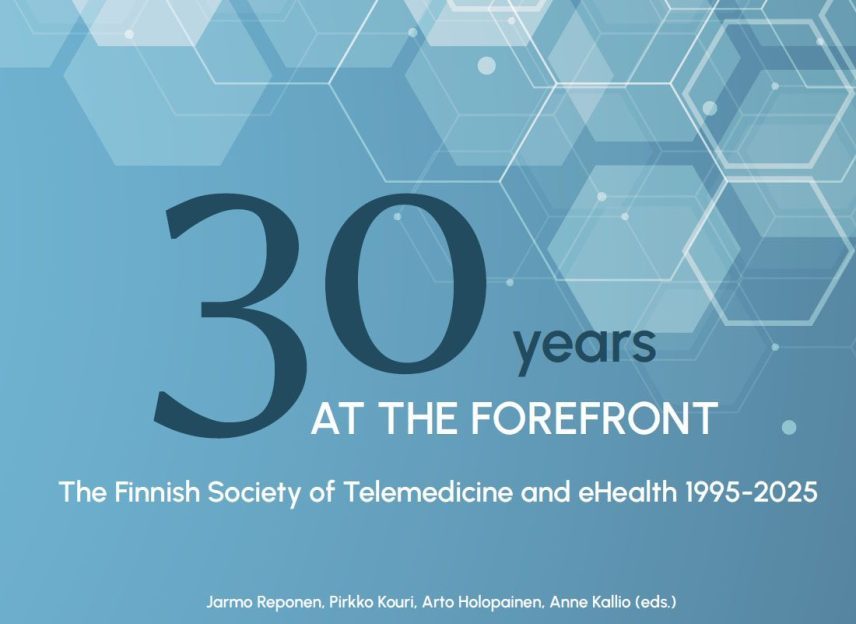
30 Years at the Forefront – The Finnish Society of Telemedicine and eHealth 1995-2025, 2025.
ISBN: 978-952-65791-5-3 (pdf)
Podcastit:
eHealth & Telemedicine Today – by STeHS
What’s happening in digital healthcare right now? In this podcast, STeHS brings you conversations on telemedicine, eHealth, and the evolving healthcare landscape—featuring voices from Finland and beyond.

Innovaatiot ja yrittäjyys suomalaisessa eHealthissa
This episode was recorded live at the eHealth2025 Conference, part of the 30th anniversary of the Finnish Society of Telemedicine and eHealth (STeHS). Hosts of this podcast are Titta Venho and Anna Saranlinna.In this discussion, Kalevi Virta, CEO of eWell Oy, and Arto Holopainen, Innovation Director at the City of Kuopio, share their perspectives on the development of the Finnish eHealth ecosystem, with a particular focus on innovation, entrepreneurship, and collaboration.The conversation explores how digital health has evolved in Finland over the past decades, highlighting key milestones such as mobile technologies, national digital health services, and international collaboration. The speakers reflect on the opportunities and challenges faced by startups and innovators in the health technology sector, including funding, regulation, and access to real-world testing environments.The episode also discusses the role of cities, ecosystems, and collaborative networks in supporting innovation, as well as the importance of early user engagement and cross-sector partnerships. Looking ahead, the discussion touches on future trends such as artificial intelligence, data-driven services, and the increasing demand for sustainable and scalable digital health solutions.Finally, the guests share practical advice for entrepreneurs and emphasize the need for stronger strategic leadership, long-term investment, and continued cooperation between public and private sectors to drive meaningful impact in healthcare.Note: This episode is in Finnish.Full transcript is available in https://www.telemedicine.fi/julkaisut/
Vaikuttavuus digitaalisissa terveyspalveluissa
This episode was recorded live at the eHealth2025 Conference, part of the 30th anniversary of the Finnish Society of Telemedicine and eHealth (STeHS). Hosts of this podcast are Titta Venho and Anna Saranlinna.In this discussion, Mika Perttu, Director of Digital Transformation at the City of Helsinki’s Social, Health and Rescue Division, and Minna Saranpää, Customer Manager and Social and Healthcare Specialist at Vivago Oy, explore the topic of impact and effectiveness in digital health and care services.As digitalisation continues to reshape how healthcare services are delivered, used, and evaluated, the conversation focuses on how to ensure that digital solutions truly create value for patients, professionals, and society. The speakers discuss how effectiveness can be defined, measured, and integrated into service development and decision-making.The episode highlights practical examples from both public and private sectors, addressing challenges such as fragmented systems, limited resources, and the need for better data-driven leadership. It also explores the future role of digital tools, including artificial intelligence and remote care, in improving outcomes and enabling more proactive and personalised healthcare services.Note: This episode is in Finnish.Full transcript is available: https://www.telemedicine.fi/julkaisut/
Women around the world in health care digitalisation
This episode was recorded live at the eHealth2025 Conference, part of the 30th anniversary of the Finnish Society of Telemedicine and eHealth (STeHS). Hosts of this podcast are Titta Venho and Anna Saranlinna.In this discussion, Dr Michelle Griffith, President of ISfTeH, a physician specializing in internal, lifestyle, and integrative medicine with over 30 years of clinical experience, and Professor Pirkko Kouri, Vice President of ISfTeH and a Finnish expert in health informatics and digital health education, explore the theme Women Around the World in Healthcare Digitalisation.Together, they reflect on how gender shapes the development, leadership, and use of digital health services across different cultural and global contexts. The conversation highlights both the challenges women face in technology-driven environments and the critical role they play in designing more inclusive, holistic healthcare solutions.The episode also offers insights into international collaboration, leadership experiences, and practical advice for women aiming to make an impact in the rapidly evolving field of telemedicine and eHealth.Full transcript will be available in: https://www.telemedicine.fi/julkaisut/
Jaksot päivittyvät tälle sivulle automaattisesti. Kaikki jaksot myös Spotifyssa.
Konferenssijulkaisut:
- XXXI Kansallinen ja kansainvälinen Telelääketieteen ja eHealth konferenssi, #eHealth2026: Effective digital solutions in health care and social welfare services, 2026, ISBN 978-952-65791-4-6 (PDF)
- XXX Kansallinen telelääketieteen ja eHealth seminaari, #eHealth2025: Strengthening Interoperability and Equality in Digital Health with Nordic Innovations, 2025, ISBN 978-952-65791-3-9 (PDF)
- XXIX Kansallinen telelääketieteen ja eHealth seminaari, #eHealth2024: From Research to Impact on Digital Health and Welfare Services, 2024, ISBN 978-952-69224-9-2 (PDF)
- XXVIII Kansallinen telelääketieteen ja eHealth seminaari, #eHealth2023: Human oriented approach in eHealth and digital services, 2023, ISBN 978-952-69224-8-5 (pdf)
- XXVII Kansallinen telelääketieteen ja eHealth seminaari, #eHealth2022: Digital Health – from Research to Applied Solutions, 2022, ISBN 978-952-69224-6-1 (PDF)
- XXVI Kansallinen telelääketieteen ja eHealth seminaari, #eHealth2021: eHealth in a Lifecycle, 2021, ISBN: 978-952-69224-4-7 (pdf)
- XXV Kansallinen telelääketieteen ja eHealth seminaari, eHealth2020: From Dream to Reality, 2020, ISBN: 978-952-69224-2-3 (pdf)
- XXIV Kansallinen telelääketieteen ja eHealth seminaari, eHealth2019: Data-Driven Health, 2019, ISBN: 978-952-68112-9-1 (pdf)
- XXIII Kansallinen telelääketieteen ja eHealth seminaari, eHealth2018: Health communities facing cyber transformation, 2018, ISBN: 978-952-68112-8-4 (pdf)
- XXII Kansallinen telelääketieteen ja eHealth seminaari: Win-Win-Win, voittaako kansalainen, ammattilainen ja yhteiskunta?, 2017, ISBN: 978-952-68112-6-0 (pdf)
- XXI Kansallinen telelääketieteen ja eHealth seminaari, Nordic eHealth2016 Kokeilukulttuuri ja digitalisaatio, 2016, ISBN: 978-952-68112-4-6 (pdf)
- XX Kansallinen telelääketieteen ja eHealth seminaari: eHealth, muutoksen moottori, 2015, ISBN: 978-952-68112-2-2 (pdf)
- XIX Kansallinen telelääketieteen ja eHealth seminaari: Matkalla vaikuttavaan eTerveyteen, 2014, ISBN: 978-952-67213-9-2 (pdf)
- XVIII Kansallinen telelääketieteen ja eHealth seminaari: Teknologiatalkoilla parempiin hoitotuloksiin, 2013, ISBN: 978-952-67213-8-5 (pdf)
- XVII Kansallinen telelääketieteen ja eHealth seminaari: Tietoa tarpeeseen, 2012, ISBN: 978-952-67213-6-1 (pdf)
- XVI Kansallinen telelääketieteen ja eHealth seminaari: Maalta maailmalle – Aluemalli terveyspalveluiden kehittämisessä, 2011, ISBN: 978-952-67213-4-7 (pdf)
- XV Kansallinen telelääketieteen ja eHealth seminaari: Katse yli rajojen, 2010, ISBN: 978-952-67213-2-3 (pdf)
- XIV Kansallinen telelääketieteen ja eHealth seminaari: Terveyttä verkosta ja verkostosta, 2009, ISBN: 978-952-67213-0-9 (pdf)
- XIII Kansallinen telelääketieteen ja eHealth seminaari: e-Health kansalaisen palveluksessa, 2008 (pdf)