Julkaisut

Tieteellinen lehti:

Finnish Journal of eHealth and eWelfare (FinJeHeW), http://www.finjehew.fi

FinJeHeW on Suomen Telelääketieteen ja eHealth-seuran ja Sosiaali- ja terveydenhuollon tietojenkäsittely-yhdistyksen yhteisesti vuodesta 2009 alkaen julkaisema tieteellinen lehti. Lehti kuuluu julkaisufoorumi-luokkaan 1. Lehden ISSN-tunnus on 1798-0798.

FinJeHeW ottaa vastaan tieteellisiä artikkeleita sekä muuta aineistoa sosiaali- ja terveydenhuollon informaatioteknologiasta, telelääketieteestä ja eHealth-alalta. Kirjoitusohjeet ovat lehden sivustolla. Lehti on pääasiassa suomenkielinen, mutta siinä on artikkeleita, niiden tiivistelmiä ja muuta aineistoa englanniksi. Lehti noudattaa käsikirjoitusten arvioinnissa kahden refereen menettelyä. Lehti ilmestyy ainakin neljä numeroa vuodessa verkkojulkaisuna pdf-muodossa. Lehden kukin numero on vapaasti saatavissa verkosta www.finjehew.fi.

« Kaikki julkaisut

Tieteelliset artikkelit

Impact of a digital care logistics system on care duration, consumer satisfaction and shift leaders' workload in emergency departments en

Digitaalisen hoidon logistiikkajärjestelmän vaikutus hoidon kestoon, asiakastyytyväisyyteen ja vuorovastaavien kuvaamaan työn kuormitukseen päivystyspoliklinikalla fi

Kahsay, Desale Tewelde; Salanterä, Sanna; Engblom, Janne; Häikiö, Mikko; Peltonen, Laura-Maria

Vol 13 Nro 4 (2021)s. 403–424doi: 10.23996/fjhw.109942Open Access

Abstract

The primary goal of introducing digital information systems in healthcare organisations is to improve care processes and outcomes, however, studies that investigate the impact of digital information systems on the day-to-day operations management from the perspective of workflow and consumer satisfaction in emergency departments are scarce. Therefore, this study aimed to explore the impact of a digital clinical logistics system on the duration of patient care, consumer satisfaction and shift leaders' experience of workload in emergency departments.

A longitudinal prospective design was used. Three units participated in the study; an intervention unit, a control unit A (no implemented system) and a control unit B (system already in use). We collected data on care duration, consumer satisfaction and shift leaders' experience of workload for four weeks at five time points both before system implementation (summer 2015, spring 2016) and after system implementation (summer 2016, autumn 2016, winter 2016).

The average care duration time increased in the postimplementation period in the intervention and control B units (p < 0.001). Duration of care was higher in the intervention unit than control unit B in summer 2016 (p < 0.001) and winter 2016 (p = 0.009). Similarly, duration of care in control unit A was higher than control unit B in spring 2016 (p < 0.001). Consumer satisfaction decreased in the intervention unit, in winter 2016 (p < 0.001) and the experience of workload increased in the intervention unit, in summer 2016 and autumn 2016 (p < 0.05). However, the patients-to-nurses ratio was doubled in the intervention unit in the last time point postimplementation when compared to the first timepoint, while it remained similar in the control units throughout the study period.

This work demonstrated that a digital care logistics system may support in increasing the number of patients treated with the same nursing resources. However, this seems to connect to other outcome variables such as increased care duration, increased experience of workload and decreased consumer satisfaction in some postimplementation time points.

Tiivistelmä (suomi)

Digitaalisten tietojärjestelmien käyttöönoton ensisijainen tavoite terveydenhuollon organisaatioissa on parantaa hoitoprosesseja ja tuloksia, mutta tutkimuksia, joissa mitataan digitaalisten tietojärjestelmien vaikutusta päivittäisen toiminnan johtamiseen työnkulun näkökulmasta, on vielä vähän. Tämän tutkimuksen tarkoituksena oli selvittää digitaalisen hoidon logistiikkajärjestelmän vaikutusta potilaiden hoidon kestoon, palveluita käyttävien tyytyväisyyteen ja vuorovastaavien raportoimaan työn kuormitukseen päivystyksessä.

Tutkimus tehtiin pitkittäisellä asetelmalla. Kolme yksikköä osallistui tutkimukseen; interventioyksikkö, kontrolliyksikkö A (ei tietojärjestelmän käyttöönottoa) ja kontrolliyksikkö B (tietojärjestelmä jo käytössä). Aineistoa kerättiin potilaiden hoidon kestosta, kuluttajien tyytyväisyydestä palveluihin, sekä vuorovastaavien arvioimasta yksikön työkuormasta neljän viikon intervalleissa yhteensä viisi kertaa - ennen tietojärjestelmän käyttöönottoa (kesä 2015, kevät 2016) ja käyttöönoton jälkeen (kesä 2016, syksy 2016 ja talvi 2016).

Potilaiden keskimääräinen hoidon kesto kasvoi käyttöönoton jälkeisenä aikana interventio- ja kontrolli B -yksiköissä (p <0,001). Hoidon kesto oli interventioyksikössä pidempi kuin kontrolli B -yksikössä kesällä 2016 (p <0,001) ja talvella 2016 (p = 0,009). Vastaavasti hoidon kesto kontrolli A -yksikössä oli pidempi verrattuna kontrolli B -yksikköön keväällä 2016 (p <0,001). Kuluttajien tyytyväisyys laski interventioyksikössä talvella 2016 (p <0,001) ja heidän raportoima kokemus työkuormasta kasvoi kesällä 2016 ja syksyllä 2016 (p <0,05). Potilas per sairaanhoitaja -määrä kaksinkertaistui kuitenkin interventioyksikössä viimeisenä mittausajankohtana verrattuna ensimmäiseen ajankohtaan, kun luku pysyi samanlaisena molemmissa kontrolliyksiköissä koko tutkimuksen ajan.

Tämä työ osoitti, että digitaalinen hoidon logistiikkajärjestelmä voi auttaa lisäämään samoilla hoitoresursseilla hoidettavien potilaiden määrää. Tämä näyttää kuitenkin olevan yhteydessä muihin tulosmuuttujiin, kuten hoidon keston pidentymiseen, koetun työkuorman lisääntymiseen ja palveluita käyttävien tyytyväisyyden heikkenemiseen joissakin käyttöönoton jälkeisissä ajankohdissa.

Avainsanat

emergency departmentinformation systemduration of caresatisfactionworkload

Kanoninen lähde ja PDF: journal.fi. Tätä artikkelia ei ole kopioitu tälle palvelimelle.
Lisenssi: http://creativecommons.org/licenses/by-nc-nd/4.0

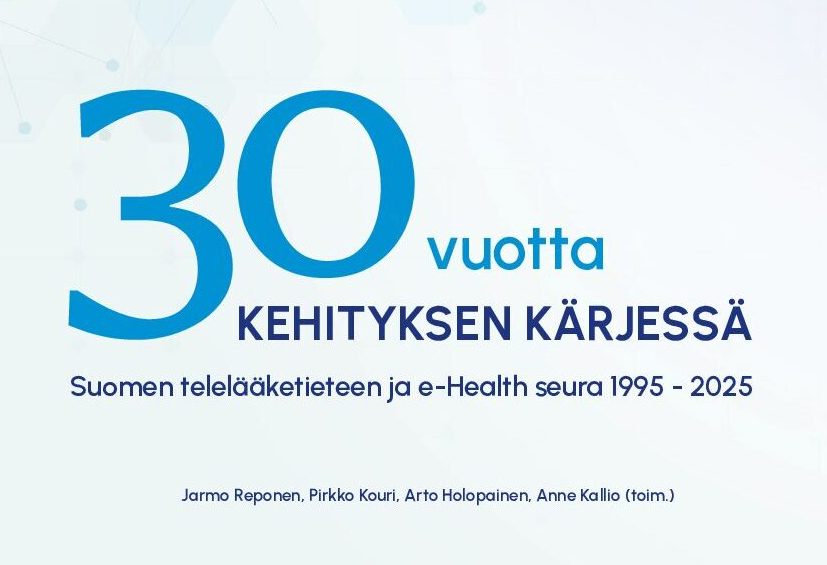
Seuran 30-vuotishistoriikki

30 VUOTTA KEHITYKSEN KÄRJESSÄ – Suomen telelääketieteen ja e-Health seura 1995-2025,  2025,
ISBN 978-952-65791-1-5 (PDF)

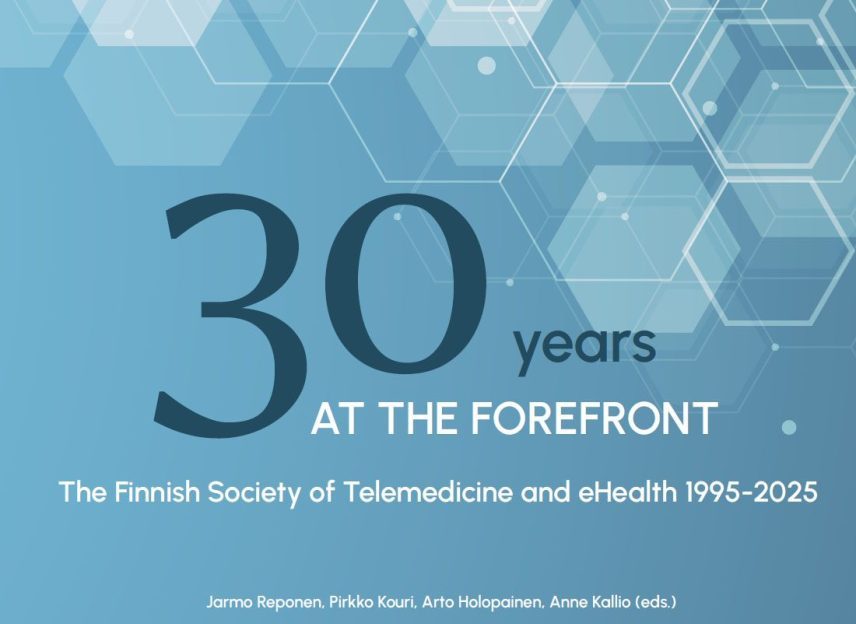
The Society’s 30-Year History

30 Years at the Forefront – The Finnish Society of Telemedicine and eHealth 1995-2025, 2025.
ISBN: 978-952-65791-5-3 (pdf)

Podcastit:

Suomen Telelääketieteen ja e-Health seura · Podcast

eHealth & Telemedicine Today – by STeHS

What’s happening in digital healthcare right now? In this podcast, STeHS brings you conversations on telemedicine, eHealth, and the evolving healthcare landscape—featuring voices from Finland and beyond.

Jakso 3 · 13.6.2026 · 33 min

Innovaatiot ja yrittäjyys suomalaisessa eHealthissa

This episode was recorded live at the eHealth2025 Conference, part of the 30th anniversary of the Finnish Society of Telemedicine and eHealth (STeHS). Hosts of this podcast are Titta Venho and Anna Saranlinna.In this discussion, Kalevi Virta, CEO of eWell Oy, and Arto Holopainen, Innovation Director at the City of Kuopio, share their perspectives on the development of the Finnish eHealth ecosystem, with a particular focus on innovation, entrepreneurship, and collaboration.The conversation explores how digital health has evolved in Finland over the past decades, highlighting key milestones such as mobile technologies, national digital health services, and international collaboration. The speakers reflect on the opportunities and challenges faced by startups and innovators in the health technology sector, including funding, regulation, and access to real-world testing environments.The episode also discusses the role of cities, ecosystems, and collaborative networks in supporting innovation, as well as the importance of early user engagement and cross-sector partnerships. Looking ahead, the discussion touches on future trends such as artificial intelligence, data-driven services, and the increasing demand for sustainable and scalable digital health solutions.Finally, the guests share practical advice for entrepreneurs and emphasize the need for stronger strategic leadership, long-term investment, and continued cooperation between public and private sectors to drive meaningful impact in healthcare.Note: This episode is in Finnish.Full transcript is available in https://www.telemedicine.fi/julkaisut/
Spotifyssa
Jakso 2 · 6.6.2026 · 32 min

Vaikuttavuus digitaalisissa terveyspalveluissa

This episode was recorded live at the eHealth2025 Conference, part of the 30th anniversary of the Finnish Society of Telemedicine and eHealth (STeHS). Hosts of this podcast are Titta Venho and Anna Saranlinna.In this discussion, Mika Perttu, Director of Digital Transformation at the City of Helsinki’s Social, Health and Rescue Division, and Minna Saranpää, Customer Manager and Social and Healthcare Specialist at Vivago Oy, explore the topic of impact and effectiveness in digital health and care services.As digitalisation continues to reshape how healthcare services are delivered, used, and evaluated, the conversation focuses on how to ensure that digital solutions truly create value for patients, professionals, and society. The speakers discuss how effectiveness can be defined, measured, and integrated into service development and decision-making.The episode highlights practical examples from both public and private sectors, addressing challenges such as fragmented systems, limited resources, and the need for better data-driven leadership. It also explores the future role of digital tools, including artificial intelligence and remote care, in improving outcomes and enabling more proactive and personalised healthcare services.Note: This episode is in Finnish.Full transcript is available: https://www.telemedicine.fi/julkaisut/
Spotifyssa
Jakso 1 · 31.5.2026 · 27 min

Women around the world in health care digitalisation

This episode was recorded live at the eHealth2025 Conference, part of the 30th anniversary of the Finnish Society of Telemedicine and eHealth (STeHS). Hosts of this podcast are Titta Venho and Anna Saranlinna.In this discussion, Dr Michelle Griffith, President of ISfTeH, a physician specializing in internal, lifestyle, and integrative medicine with over 30 years of clinical experience, and Professor Pirkko Kouri, Vice President of ISfTeH and a Finnish expert in health informatics and digital health education, explore the theme Women Around the World in Healthcare Digitalisation.Together, they reflect on how gender shapes the development, leadership, and use of digital health services across different cultural and global contexts. The conversation highlights both the challenges women face in technology-driven environments and the critical role they play in designing more inclusive, holistic healthcare solutions.The episode also offers insights into international collaboration, leadership experiences, and practical advice for women aiming to make an impact in the rapidly evolving field of telemedicine and eHealth.Full transcript will be available in: https://www.telemedicine.fi/julkaisut/

Spotifyssa

Jaksot päivittyvät tälle sivulle automaattisesti. Kaikki jaksot myös Spotifyssa.

Konferenssijulkaisut:

  • XXXI Kansallinen ja kansainvälinen Telelääketieteen ja eHealth konferenssi, #eHealth2026: Effective digital solutions in health care and social welfare services, 2026, ISBN 978-952-65791-4-6 (PDF) 
  • XXX Kansallinen telelääketieteen ja eHealth seminaari, #eHealth2025: Strengthening Interoperability and Equality in Digital Health with Nordic Innovations, 2025, ISBN 978-952-65791-3-9 (PDF)
  • XXIX Kansallinen telelääketieteen ja eHealth seminaari, #eHealth2024: From Research to Impact on Digital Health and Welfare Services, 2024, ISBN 978-952-69224-9-2 (PDF)
  • XXVIII Kansallinen telelääketieteen ja eHealth seminaari, #eHealth2023: Human oriented approach in eHealth and digital services, 2023, ISBN 978-952-69224-8-5 (pdf)
  • XXVII Kansallinen telelääketieteen ja eHealth seminaari, #eHealth2022: Digital Health – from Research to Applied Solutions, 2022, ISBN 978-952-69224-6-1 (PDF)
  • XXVI Kansallinen telelääketieteen ja eHealth seminaari, #eHealth2021: eHealth in a Lifecycle, 2021, ISBN: 978-952-69224-4-7 (pdf)
  • XXV Kansallinen telelääketieteen ja eHealth seminaari, eHealth2020: From Dream to Reality, 2020, ISBN: 978-952-69224-2-3 (pdf)
  • XXIV Kansallinen telelääketieteen ja eHealth seminaari, eHealth2019: Data-Driven Health, 2019, ISBN: 978-952-68112-9-1 (pdf)
  • XXIII Kansallinen telelääketieteen ja eHealth seminaari, eHealth2018: Health communities facing cyber transformation, 2018, ISBN: 978-952-68112-8-4 (pdf)
  • XXII Kansallinen telelääketieteen ja eHealth seminaari: Win-Win-Win, voittaako kansalainen, ammattilainen ja yhteiskunta?, 2017, ISBN: 978-952-68112-6-0 (pdf)
  • XXI Kansallinen telelääketieteen ja eHealth seminaari, Nordic eHealth2016 Kokeilukulttuuri ja digitalisaatio, 2016, ISBN: 978-952-68112-4-6 (pdf)
  • XX Kansallinen telelääketieteen ja eHealth seminaari: eHealth, muutoksen moottori, 2015, ISBN: 978-952-68112-2-2 (pdf)
  • XIX Kansallinen telelääketieteen ja eHealth seminaari: Matkalla vaikuttavaan eTerveyteen, 2014, ISBN: 978-952-67213-9-2 (pdf)
  • XVIII Kansallinen telelääketieteen ja eHealth seminaari: Teknologiatalkoilla parempiin hoitotuloksiin, 2013, ISBN: 978-952-67213-8-5 (pdf)
  • XVII Kansallinen telelääketieteen ja eHealth seminaari: Tietoa tarpeeseen, 2012, ISBN: 978-952-67213-6-1 (pdf)
  • XVI Kansallinen telelääketieteen ja eHealth seminaari: Maalta maailmalle – Aluemalli terveyspalveluiden kehittämisessä, 2011, ISBN: 978-952-67213-4-7 (pdf)
  • XV Kansallinen telelääketieteen ja eHealth seminaari: Katse yli rajojen, 2010, ISBN: 978-952-67213-2-3 (pdf)
  • XIV Kansallinen telelääketieteen ja eHealth seminaari: Terveyttä verkosta ja verkostosta, 2009, ISBN: 978-952-67213-0-9 (pdf)
  • XIII Kansallinen telelääketieteen ja eHealth seminaari: e-Health kansalaisen palveluksessa, 2008 (pdf)
Scroll to Top