Julkaisut
Tieteellinen lehti:
Finnish Journal of eHealth and eWelfare (FinJeHeW), http://www.finjehew.fi
FinJeHeW on Suomen Telelääketieteen ja eHealth-seuran ja Sosiaali- ja terveydenhuollon tietojenkäsittely-yhdistyksen yhteisesti vuodesta 2009 alkaen julkaisema tieteellinen lehti. Lehti kuuluu julkaisufoorumi-luokkaan 1. Lehden ISSN-tunnus on 1798-0798.
FinJeHeW ottaa vastaan tieteellisiä artikkeleita sekä muuta aineistoa sosiaali- ja terveydenhuollon informaatioteknologiasta, telelääketieteestä ja eHealth-alalta. Kirjoitusohjeet ovat lehden sivustolla. Lehti on pääasiassa suomenkielinen, mutta siinä on artikkeleita, niiden tiivistelmiä ja muuta aineistoa englanniksi. Lehti noudattaa käsikirjoitusten arvioinnissa kahden refereen menettelyä. Lehti ilmestyy ainakin neljä numeroa vuodessa verkkojulkaisuna pdf-muodossa. Lehden kukin numero on vapaasti saatavissa verkosta www.finjehew.fi.
Käyttökokemusarvioita sairaanhoitajan näkökulmasta asiakas- ja potilastietojärjestelmistä sosiaali- ja terveydenhuollon yhteisissä palveluissa ja yleensä terveydenhuollossa fi
Assessments of nurses’ experiences of patient and client information system usage in joint health care and social welfare services and overall in health care en
Saranto, Kaija; Koponen, Samuli; Kivekäs, Eija; Vehko, Tuulikki
Tiivistelmä
Tutkimuksen tarkoituksena oli arvioida, miten sosiaali- ja terveydenhuollon yhteisissä palveluissa, kuten kotisairaanhoidossa, kotisairaalassa tai palvelutalossa, työskentelevät sairaanhoitajat kokevat asiakas- ja potilastietojärjestelmien käytön työssään ja miten tietojärjestelmien käyttö eroaa eri toimintaympäristöissä.
Sairaanhoitajaliiton, Tehyn sekä Akavan sairaanhoitajat ja Taja ry:n (TAJA) jäsenrekistereihin kuuluneilta sairaanhoitajilta, kätilöiltä tai terveydenhoitajilta kerättiin sähköisellä kyselyllä kokemuksia tietojärjestelmien käytöstä keväällä 2020. Kysely osoitettiin julkisessa terveydenhuollossa, sosiaalihuollossa tai yksityisellä sektorilla toimiville. Kyselyyn vastasi 3610 sairaanhoitajaa. Vastaajista poimittiin sairaanhoitajat, jotka työskentelevät sosiaali- ja terveydenhuollon yhteisissä palveluissa joko kotisairaanhoidossa, kotisairaalassa tai palvelutalossa (n=370), ja heidän kokemuksiaan verrattiin terveydenhuollossa (n=3240) toimivien käyttökokemuksiin. Analyysimenetelmänä käytettiin ordinaalista logistista regressioanalyysia. Lisäksi analysoitiin yhteisissä palveluissa toimivien avovastausten tietojärjestelmäpalautetta.
Yhteisissä palveluissa sairaanhoitajien käyttämistä asiakas- tai potilastietojärjestelmistä 13 oli samoja tuotemerkkejä kuin terveydenhuollossa toimivilla sairaanhoitajilla oli käytössä. Tietojärjestelmien käyttäjät arvioivat taitonsa hyviksi, mutta työnantajan tarjoamaa perehdytystä oli ollut liian vähän. Erityisesti yhteisissä palveluissa työskentelevät kokivat saaneensa heikompaa perehdytystä kuin terveydenhuollossa työskentelevät. Yhteisissä palveluissa työskentelevien kokemukset rakenteisen kirjaamisen tietojen hyödyntämisestä ja hoitokertomuksen saatavuudesta olivat myönteisempiä terveydenhuollossa toimiviin verrattuna. Molemmat vastaajaryhmät kokivat, että potilastietojen saaminen toisesta organisaatiosta vie usein liikaa aikaa. Yhteisissä palveluissa toimivat sairaanhoitajat käyttivät puhelinta tietojen hankintaan päivittäin tilastollisesti enemmän terveydenhuollossa toimiviin verrattuna. Molemmat vastaajaryhmät käyttivät Kanta-palveluja niukasti. Tietojärjestelmien kehittämistä tukemaan sairaanhoitajien työtä erilaisissa toimintaympäritöissä on edelleen syytä jatkaa. Työnantajien on jatkossa syytä vahvistaa perehdytystä ajoituksen, sisällön ja määrän suhteen, jotta järjestelmien hyödyt ja tuki työlle saadaan esiin.
Abstract (English)
The purpose of this study was to assess how nurses working in health care and joint health care and social welfare services, such as home nursing or home hospital services and sheltered home, use patient and client information systems in their work and how the systems’ usage differs in different settings.
An electronic questionnaire was sent to nurses who were members of the Finnish Nurses Association, TEHY, and AKAVA Nursing Professionals working in the public health and social sector as well as the private sector in spring 2020. A total of 3,610 registered nurses, including midwives and public health nurses, responded to the questionnaire. The responses of those nurses working in the joint health care and social welfare services, e.g. home nursing, home hospital services, or sheltered home (n=370), were extracted from the data, and their experiences were compared to the experiences of registered nurses working in health care settings (n=3,240). Ordinal logistic regression analysis was used for data analysis. Further, the feedback concerning information system usage in an open-ended question was analyzed.
Registered nurses used 13 same brads of patient and client information systems in joint health care and social welfare services as their’ colleagued used in health care. Registered nurses regarded themselves as proficient users, but the in-service training had not been sufficient. Those working in the joint services especially felt that the in-service training had been more unsatisfactory than those working in the health care settings. The positive experiences of registered nurses using structured documentation (OR 1.30, p=0.049) and nursing records (OR 1.37, p=0.008) in the joint services differed significantly from those working in health care settings. Both groups felt that receiving patient data from other organizations often takes too long. Registered nurses working in the joint services made significantly more phone calls daily (OR 1.77, p< 0.001) to acquire data than registered nurses in health care. Both groups used Kanta services occasionally. The development of information systems to support the work of nurses in different operating environments should be continued. In the future, there is a need to strengthen in-serve training in terms of timing, content, and length to enhance and support registered nurses’ work.
Avainsanat
Kanoninen lähde ja PDF: journal.fi. Tätä artikkelia ei ole kopioitu tälle palvelimelle.
Lisenssi: http://creativecommons.org/licenses/by-nc-nd/4.0
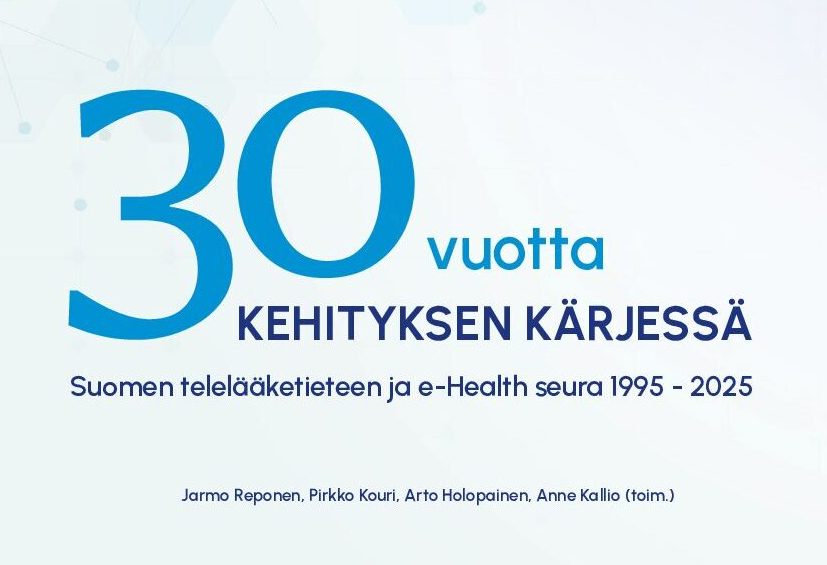
Seuran 30-vuotishistoriikki
30 VUOTTA KEHITYKSEN KÄRJESSÄ – Suomen telelääketieteen ja e-Health seura 1995-2025, 2025,
ISBN 978-952-65791-1-5 (PDF)
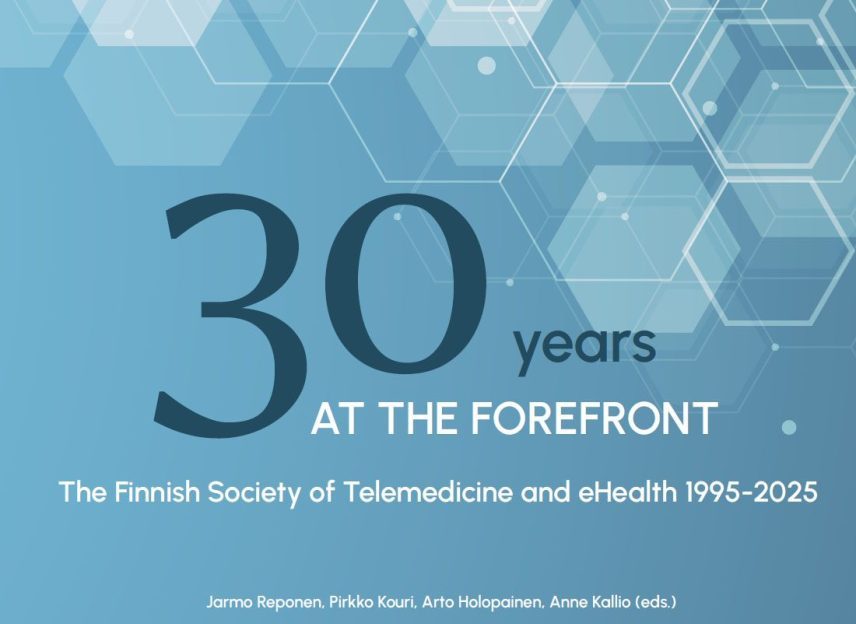
The Society’s 30-Year History
30 Years at the Forefront – The Finnish Society of Telemedicine and eHealth 1995-2025, 2025.
ISBN: 978-952-65791-5-3 (pdf)
Podcastit:
eHealth & Telemedicine Today – by STeHS
What’s happening in digital healthcare right now? In this podcast, STeHS brings you conversations on telemedicine, eHealth, and the evolving healthcare landscape—featuring voices from Finland and beyond.

Innovaatiot ja yrittäjyys suomalaisessa eHealthissa
This episode was recorded live at the eHealth2025 Conference, part of the 30th anniversary of the Finnish Society of Telemedicine and eHealth (STeHS). Hosts of this podcast are Titta Venho and Anna Saranlinna.In this discussion, Kalevi Virta, CEO of eWell Oy, and Arto Holopainen, Innovation Director at the City of Kuopio, share their perspectives on the development of the Finnish eHealth ecosystem, with a particular focus on innovation, entrepreneurship, and collaboration.The conversation explores how digital health has evolved in Finland over the past decades, highlighting key milestones such as mobile technologies, national digital health services, and international collaboration. The speakers reflect on the opportunities and challenges faced by startups and innovators in the health technology sector, including funding, regulation, and access to real-world testing environments.The episode also discusses the role of cities, ecosystems, and collaborative networks in supporting innovation, as well as the importance of early user engagement and cross-sector partnerships. Looking ahead, the discussion touches on future trends such as artificial intelligence, data-driven services, and the increasing demand for sustainable and scalable digital health solutions.Finally, the guests share practical advice for entrepreneurs and emphasize the need for stronger strategic leadership, long-term investment, and continued cooperation between public and private sectors to drive meaningful impact in healthcare.Note: This episode is in Finnish.Full transcript is available in https://www.telemedicine.fi/julkaisut/
Vaikuttavuus digitaalisissa terveyspalveluissa
This episode was recorded live at the eHealth2025 Conference, part of the 30th anniversary of the Finnish Society of Telemedicine and eHealth (STeHS). Hosts of this podcast are Titta Venho and Anna Saranlinna.In this discussion, Mika Perttu, Director of Digital Transformation at the City of Helsinki’s Social, Health and Rescue Division, and Minna Saranpää, Customer Manager and Social and Healthcare Specialist at Vivago Oy, explore the topic of impact and effectiveness in digital health and care services.As digitalisation continues to reshape how healthcare services are delivered, used, and evaluated, the conversation focuses on how to ensure that digital solutions truly create value for patients, professionals, and society. The speakers discuss how effectiveness can be defined, measured, and integrated into service development and decision-making.The episode highlights practical examples from both public and private sectors, addressing challenges such as fragmented systems, limited resources, and the need for better data-driven leadership. It also explores the future role of digital tools, including artificial intelligence and remote care, in improving outcomes and enabling more proactive and personalised healthcare services.Note: This episode is in Finnish.Full transcript is available: https://www.telemedicine.fi/julkaisut/
Women around the world in health care digitalisation
This episode was recorded live at the eHealth2025 Conference, part of the 30th anniversary of the Finnish Society of Telemedicine and eHealth (STeHS). Hosts of this podcast are Titta Venho and Anna Saranlinna.In this discussion, Dr Michelle Griffith, President of ISfTeH, a physician specializing in internal, lifestyle, and integrative medicine with over 30 years of clinical experience, and Professor Pirkko Kouri, Vice President of ISfTeH and a Finnish expert in health informatics and digital health education, explore the theme Women Around the World in Healthcare Digitalisation.Together, they reflect on how gender shapes the development, leadership, and use of digital health services across different cultural and global contexts. The conversation highlights both the challenges women face in technology-driven environments and the critical role they play in designing more inclusive, holistic healthcare solutions.The episode also offers insights into international collaboration, leadership experiences, and practical advice for women aiming to make an impact in the rapidly evolving field of telemedicine and eHealth.Full transcript will be available in: https://www.telemedicine.fi/julkaisut/
Jaksot päivittyvät tälle sivulle automaattisesti. Kaikki jaksot myös Spotifyssa.
Konferenssijulkaisut:
- XXXI Kansallinen ja kansainvälinen Telelääketieteen ja eHealth konferenssi, #eHealth2026: Effective digital solutions in health care and social welfare services, 2026, ISBN 978-952-65791-4-6 (PDF)
- XXX Kansallinen telelääketieteen ja eHealth seminaari, #eHealth2025: Strengthening Interoperability and Equality in Digital Health with Nordic Innovations, 2025, ISBN 978-952-65791-3-9 (PDF)
- XXIX Kansallinen telelääketieteen ja eHealth seminaari, #eHealth2024: From Research to Impact on Digital Health and Welfare Services, 2024, ISBN 978-952-69224-9-2 (PDF)
- XXVIII Kansallinen telelääketieteen ja eHealth seminaari, #eHealth2023: Human oriented approach in eHealth and digital services, 2023, ISBN 978-952-69224-8-5 (pdf)
- XXVII Kansallinen telelääketieteen ja eHealth seminaari, #eHealth2022: Digital Health – from Research to Applied Solutions, 2022, ISBN 978-952-69224-6-1 (PDF)
- XXVI Kansallinen telelääketieteen ja eHealth seminaari, #eHealth2021: eHealth in a Lifecycle, 2021, ISBN: 978-952-69224-4-7 (pdf)
- XXV Kansallinen telelääketieteen ja eHealth seminaari, eHealth2020: From Dream to Reality, 2020, ISBN: 978-952-69224-2-3 (pdf)
- XXIV Kansallinen telelääketieteen ja eHealth seminaari, eHealth2019: Data-Driven Health, 2019, ISBN: 978-952-68112-9-1 (pdf)
- XXIII Kansallinen telelääketieteen ja eHealth seminaari, eHealth2018: Health communities facing cyber transformation, 2018, ISBN: 978-952-68112-8-4 (pdf)
- XXII Kansallinen telelääketieteen ja eHealth seminaari: Win-Win-Win, voittaako kansalainen, ammattilainen ja yhteiskunta?, 2017, ISBN: 978-952-68112-6-0 (pdf)
- XXI Kansallinen telelääketieteen ja eHealth seminaari, Nordic eHealth2016 Kokeilukulttuuri ja digitalisaatio, 2016, ISBN: 978-952-68112-4-6 (pdf)
- XX Kansallinen telelääketieteen ja eHealth seminaari: eHealth, muutoksen moottori, 2015, ISBN: 978-952-68112-2-2 (pdf)
- XIX Kansallinen telelääketieteen ja eHealth seminaari: Matkalla vaikuttavaan eTerveyteen, 2014, ISBN: 978-952-67213-9-2 (pdf)
- XVIII Kansallinen telelääketieteen ja eHealth seminaari: Teknologiatalkoilla parempiin hoitotuloksiin, 2013, ISBN: 978-952-67213-8-5 (pdf)
- XVII Kansallinen telelääketieteen ja eHealth seminaari: Tietoa tarpeeseen, 2012, ISBN: 978-952-67213-6-1 (pdf)
- XVI Kansallinen telelääketieteen ja eHealth seminaari: Maalta maailmalle – Aluemalli terveyspalveluiden kehittämisessä, 2011, ISBN: 978-952-67213-4-7 (pdf)
- XV Kansallinen telelääketieteen ja eHealth seminaari: Katse yli rajojen, 2010, ISBN: 978-952-67213-2-3 (pdf)
- XIV Kansallinen telelääketieteen ja eHealth seminaari: Terveyttä verkosta ja verkostosta, 2009, ISBN: 978-952-67213-0-9 (pdf)
- XIII Kansallinen telelääketieteen ja eHealth seminaari: e-Health kansalaisen palveluksessa, 2008 (pdf)