Publications

Scientific journal:

Finnish Journal of eHealth and eWelfare (FinJeHeW), https://www.finjehew.fi

FinJeHeW is a scientific journal published jointly by the Finnish Society for Telemedicine and eHealth and the Finnish Association for Social and Health Care Informatics since 2009. The journal belongs to publication platform category 1. The ISSN of the journal is 1798-0798.

FinJeHeW welcomes scientific articles and other material related to information technology in social and healthcare services, telemedicine, and eHealth. Author guidelines are available on the journal’s website. The journal is published mainly in Finnish, but it also includes articles, abstracts, and other material in English. Manuscripts are evaluated using a double-referee peer review process. The journal publishes at least four issues per year as an online publication in PDF format. Each issue is freely available online. www.finjehew.fi.

« Kaikki julkaisut

Tieteelliset artikkelit

Sähköisten oirearvioiden käytettävyys fi

Usability of online symptom checkers en

Liu, Ville D; Sellgren, Lasse; Kaila, Minna; Koskela, Tuomas

Vol 13 Nro 2 (2021)s. 100–112doi: 10.23996/fjhw.97020Open Access

Tiivistelmä

Kunnat uudistavat terveydenhuolto- ja sosiaalihuoltopalveluitaan ja luovat sähköisiä palveluita potilaiden omahoidon tueksi (Omaolo-projekti). Näihin kuuluvat 15 eri oireisiin keskittyvää sähköistä oirearviointityökalua. Täytetyn oirearvion tuloksena potilas saa arvion vastaavan oireen hoidon tarpeen kiireellisyydestä, ohjeet hoitopaikan valitsemisesta sekä tarvittaessa itsehoito-ohjeita. Tässä tutkimuksessa tutkitaan oirearvioiden käytettävyyttä potilaan ja tutkimusavustajan näkökulmasta.

Tämä on monimenetelmä tutkimus, joka käytti Omaolo-projektin oirearvioiden validointi tutkimuksessa kerättyjä tietoja. Tiedot kerättiin 18:sta perusterveydenhuollon päivystyspisteistä ympäri Suomea. Käyttäjä vastasi oirearvion esittämiin kysymyksiin, minkä jälkeen hoidon tarpeen arviointiin perehtynyt sairaanhoitaja arvioi käyttäjän oireen hoidon tarpeen. Tutkimusavustaja seurasi käyttäjän oirearvion täyttämisen. 350:n yksittäisen potilaskäyttäjän, sairaanhoitajien ja tutkimusavustajien havainnot analysoitiin erillisten täytettyjen tutkimuslomakkeiden pohjalta. Teema-analyysin avulla luotiin tutkimusteemoja tutkimukseen osallistuneiden henkilöiden kirjatuista havainnoista. Analysointivaiheessa havainnot ryhmiteltiin teemoihin, mitä seurasi vastaavien koodien ja temaattisen yhteenvedon laatiminen.

Oirearvioiden käytettävyys arvioitiin pääosin hyväksi. Haasteita käytettävyydessä myös ilmeni. Haasteita kuvaavia merkityksellisiä käsitteitä (koodeja) muodostettiin tutkimuslomakkeiden vapaan tekstin havainnoista. 59 kappaletta koodeja luokiteltiin kahteen pääteemaan - käyttäjäkohtaisiin syihin ja oirearviolähtöisiin syihin. Käyttäjäkohtaiset syyt jaettiin: a) haasteisiin sähköisen oirearvion ja sen kysymysten tulkinnassa, b) sähköisten työkalujen käyttövalmius ja c) potilaan kyky arvioida omaa terveydentilaansa. Oirearviolähtöiset syyt jaettiin: a) Oirearvioissa käytettävään terminologiaan ja kysymysasetteluun liittyvät tekijät ja b) visuaaliseen muotoiluun ja käyttäjän ohjeistukseen liittyvät tekijät.

Oirearviot ovat suurimmalle osalle potilaista hyväksyttäviä, helppokäyttöisiä ja ymmärrettäviä. Tutkimuksessa tuli esiin teemoja, jotka saattavat heikentää oirearvioiden käytettävyyttä. Oirearvioiden käytettävyyttä parantamalla voidaan parantaa hoidon tarpeen arvioinnin prosessia sekä sen onnistumista. Käytettävyyteen liittyvät ongelmat voivat heikentää potilaan halukkuutta käyttää oirearvioita.

Abstract (English)

Municipalities are reforming their health and social care services and creating online services to support patient self-treatment and self-care (The Omaolo-project). These include 15 symptom checkers which provide triage. As a result of the completed individual symptom assessment, the patient receives an assessment of the need for treatment of the corresponding symptom, instructions for a treatment site and, if necessary, self-care instructions. This study examines the usability of symptom checkers from the perspective of the patient and the study assistant.

This is a mixed methods study that used data collected in the Omaolo project’s validation of symptom checkers study. Data were collected from 18 primary health care emergency centers throughout Finland. The user answered the questions posed by the symptom checker, after which a nurse familiar with triage assessed the need for treatment of the symptom of the user. The study assistant monitored the completion of the study user's symptom checker. The findings of 350 patient users, nurses, and study assistants were analyzed based on separate completed research forms. Thematic analysis was used to create research themes from the recorded observations of the individuals followed by the preparation of a thematic summary.

The usability of symptom checkers was mainly assessed as good. However, there were challenges in usability. Relevant concepts (codes) describing the challenges were formed from the free text observations of the research forms. 59 codes were classified under two main themes; user-related challenges and issues related to the symptom checkers. The user-related challenges were divided into a) difficulties in understanding the symptom checkers and their questions, b) poor competence to use online tools, and c) ability to assess one’s health. The issues related to the symptom checkers were divided into a) a need to clarify the terms and questions used in the symptom checker, and b) a need to improve the visual layout and provide better instructions for the user.

Symptom checkers are acceptable, easy to use, and understandable to most patients. The study identified themes that may impair the availability of symptom checkers. Improving the availability of symptom checkers is likely to improve the process of triage as well as its success. In addition, usability issues can impair a patient's willingness to use symptom checkers.

Avainsanat

HoidonohjausKäyttöliittymäHoitotarpeen arviointikvalitatiivinen tutkimus [http://www.yso.fi/onto/yso/p11782]TerveydenhuoltojärjestelmätHoidon kiireellisyys (triage)

Kanoninen lähde ja PDF: journal.fi. Tätä artikkelia ei ole kopioitu tälle palvelimelle.
Lisenssi: http://creativecommons.org/licenses/by-nc-nd/4.0

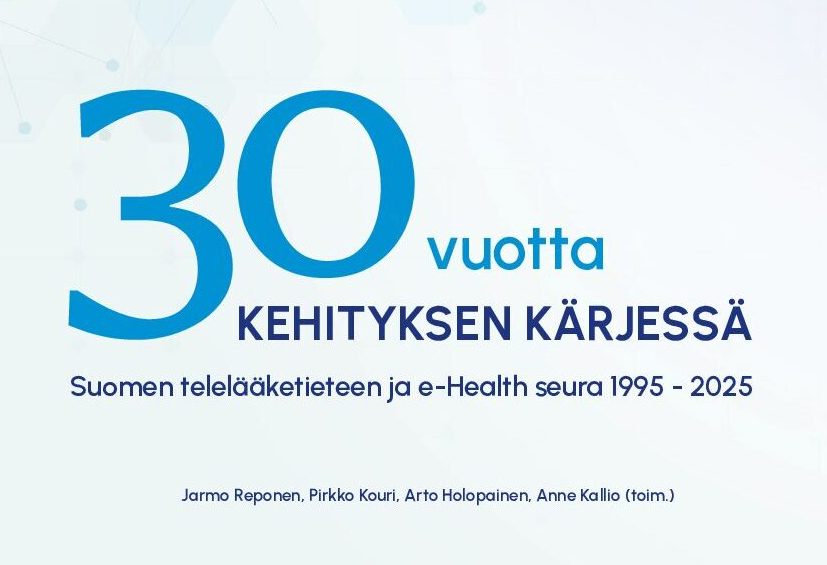
The society's 30-year history (available only in Finnish)

30 VUOTTA KEHITYKSEN KÄRJESSÄ – Suomen telelääketieteen ja e-Health seura 1995-2025,  2025,
ISBN 978-952-65791-1-5 (PDF)

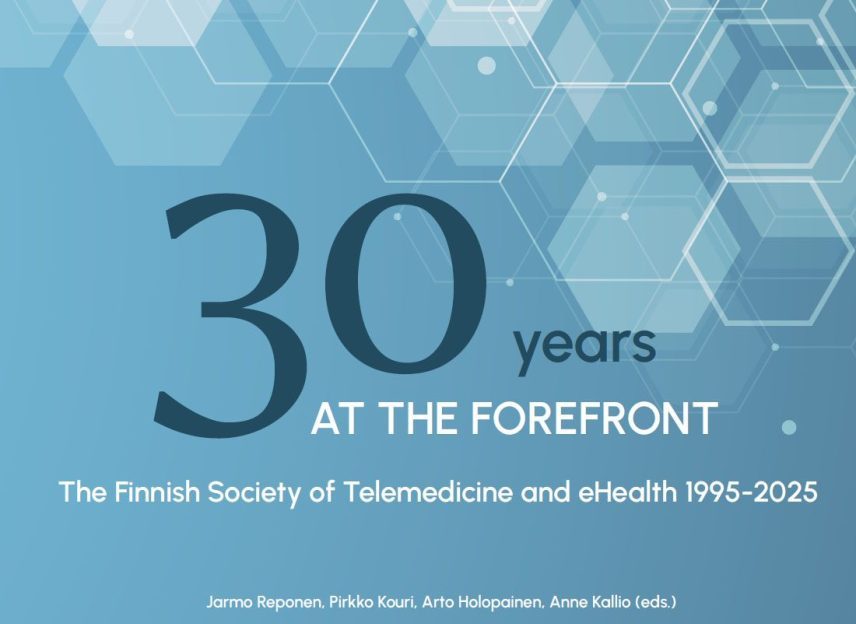
The Society’s 30-Year History

30 Years at the Forefront – The Finnish Society of Telemedicine and eHealth 1995-2025, 2025.
ISBN: 978-952-65791-5-3 (pdf)

Podcasts

Suomen Telelääketieteen ja e-Health seura · Podcast

eHealth & Telemedicine Today – by STeHS

What’s happening in digital healthcare right now? In this podcast, STeHS brings you conversations on telemedicine, eHealth, and the evolving healthcare landscape—featuring voices from Finland and beyond.

Jakso 3 · 13.6.2026 · 33 min

Innovaatiot ja yrittäjyys suomalaisessa eHealthissa

This episode was recorded live at the eHealth2025 Conference, part of the 30th anniversary of the Finnish Society of Telemedicine and eHealth (STeHS). Hosts of this podcast are Titta Venho and Anna Saranlinna.In this discussion, Kalevi Virta, CEO of eWell Oy, and Arto Holopainen, Innovation Director at the City of Kuopio, share their perspectives on the development of the Finnish eHealth ecosystem, with a particular focus on innovation, entrepreneurship, and collaboration.The conversation explores how digital health has evolved in Finland over the past decades, highlighting key milestones such as mobile technologies, national digital health services, and international collaboration. The speakers reflect on the opportunities and challenges faced by startups and innovators in the health technology sector, including funding, regulation, and access to real-world testing environments.The episode also discusses the role of cities, ecosystems, and collaborative networks in supporting innovation, as well as the importance of early user engagement and cross-sector partnerships. Looking ahead, the discussion touches on future trends such as artificial intelligence, data-driven services, and the increasing demand for sustainable and scalable digital health solutions.Finally, the guests share practical advice for entrepreneurs and emphasize the need for stronger strategic leadership, long-term investment, and continued cooperation between public and private sectors to drive meaningful impact in healthcare.Note: This episode is in Finnish.Full transcript is available in https://www.telemedicine.fi/julkaisut/
Spotifyssa
Jakso 2 · 6.6.2026 · 32 min

Vaikuttavuus digitaalisissa terveyspalveluissa

This episode was recorded live at the eHealth2025 Conference, part of the 30th anniversary of the Finnish Society of Telemedicine and eHealth (STeHS). Hosts of this podcast are Titta Venho and Anna Saranlinna.In this discussion, Mika Perttu, Director of Digital Transformation at the City of Helsinki’s Social, Health and Rescue Division, and Minna Saranpää, Customer Manager and Social and Healthcare Specialist at Vivago Oy, explore the topic of impact and effectiveness in digital health and care services.As digitalisation continues to reshape how healthcare services are delivered, used, and evaluated, the conversation focuses on how to ensure that digital solutions truly create value for patients, professionals, and society. The speakers discuss how effectiveness can be defined, measured, and integrated into service development and decision-making.The episode highlights practical examples from both public and private sectors, addressing challenges such as fragmented systems, limited resources, and the need for better data-driven leadership. It also explores the future role of digital tools, including artificial intelligence and remote care, in improving outcomes and enabling more proactive and personalised healthcare services.Note: This episode is in Finnish.Full transcript is available: https://www.telemedicine.fi/julkaisut/
Spotifyssa
Jakso 1 · 31.5.2026 · 27 min

Women around the world in health care digitalisation

This episode was recorded live at the eHealth2025 Conference, part of the 30th anniversary of the Finnish Society of Telemedicine and eHealth (STeHS). Hosts of this podcast are Titta Venho and Anna Saranlinna.In this discussion, Dr Michelle Griffith, President of ISfTeH, a physician specializing in internal, lifestyle, and integrative medicine with over 30 years of clinical experience, and Professor Pirkko Kouri, Vice President of ISfTeH and a Finnish expert in health informatics and digital health education, explore the theme Women Around the World in Healthcare Digitalisation.Together, they reflect on how gender shapes the development, leadership, and use of digital health services across different cultural and global contexts. The conversation highlights both the challenges women face in technology-driven environments and the critical role they play in designing more inclusive, holistic healthcare solutions.The episode also offers insights into international collaboration, leadership experiences, and practical advice for women aiming to make an impact in the rapidly evolving field of telemedicine and eHealth.Full transcript will be available in: https://www.telemedicine.fi/julkaisut/

Spotifyssa

Jaksot päivittyvät tälle sivulle automaattisesti. Kaikki jaksot myös Spotifyssa.

Conference publications:

  • XXXI Kansallinen ja kansainvälinen Telelääketieteen ja eHealth konferenssi, #eHealth2026: Effective digital solutions in health care and social welfare services, 2026, ISBN 978-952-65791-4-6 (PDF) 
  • XXX Kansallinen telelääketieteen ja eHealth seminaari, #eHealth2025: Strengthening Interoperability and Equality in Digital Health with Nordic Innovations, 2025, ISBN 978-952-65791-3-9 (PDF)
  • XXIX National Seminar on Telemedicine and eHealth, #eHealth2024: From Research to Impact on Digital Health and Welfare Services, 2024, ISBN 978-952-69224-9-2 (PDF)
  • XXVIII National Telemedicine and eHealth Seminar, #eHealth2023: Human oriented approach in eHealth and digital services, 2023, ISBN 978-952-69224-8-5 (pdf)
  • XXVII National Telemedicine and eHealth Seminar, #eHealth2022: Digital Health – from Research to Applied Solutions, 2022, ISBN 978-952-69224-6-1 (PDF)
  • XXVI National Telemedicine and eHealth Seminar, #eHealth2021: eHealth in a Lifecycle, 2021, ISBN: 978-952-69224-4-7 (pdf)
  • XXV National Telemedicine and eHealth Seminar, eHealth2020: From Dream to Reality, 2020, ISBN: 978-952-69224-2-3 (pdf)
  • XXIV National Telemedicine and eHealth Seminar, eHealth2019: Data-Driven Health, 2019, ISBN: 978-952-68112-9-1 (pdf)
  • XXII National Telemedicine and eHealth Seminar, eHealth2018: Health communities facing cyber transformation, 2018, ISBN: 978-952-68112-8-4 (pdf)
  • XXII National Telemedicine and eHealth Seminar, Win-Win-Win, for citizens, professionals and society, 2017, ISBN: 978-952-68112-6-0 (pdf)
  • XXI National Telemedicine and eHealth Seminar, Nordic eHealth2016 Culture of experimentation and digitalisation, 2016, ISBN: 978-952-68112-4-6 (pdf)
  • XX National Telemedicine and eHealth Seminar, eHealth, an engine for change, 2015, ISBN: 978-952-68112-2-2 (pdf)
  • XIX National Telemedicine and eHealth Seminar, Towards effective eHealth, 2014, ISBN: 978-952-67213-9-2 (pdf)
  • XVIII Kansallinen telelääketieteen ja eHealth seminaari: Teknologiatalkoilla parempiin hoitotuloksiin, 2013, ISBN: 978-952-67213-8-5 (pdf)
  • XVII Kansallinen telelääketieteen ja eHealth seminaari: Tietoa tarpeeseen, 2012, ISBN: 978-952-67213-6-1 (pdf)
  • XVI Kansallinen telelääketieteen ja eHealth seminaari: Maalta maailmalle – Aluemalli terveyspalveluiden kehittämisessä, 2011, ISBN: 978-952-67213-4-7 (pdf)
  • XV Kansallinen telelääketieteen ja eHealth seminaari: Katse yli rajojen, 2010, ISBN: 978-952-67213-2-3 (pdf)
  • XIV Kansallinen telelääketieteen ja eHealth seminaari: Terveyttä verkosta ja verkostosta, 2009, ISBN: 978-952-67213-0-9 (pdf)
  • XIII Kansallinen telelääketieteen ja eHealth seminaari: e-Health kansalaisen palveluksessa, 2008 (pdf)
Scroll to Top