Publications
Scientific journal:
Finnish Journal of eHealth and eWelfare (FinJeHeW), https://www.finjehew.fi
FinJeHeW is a scientific journal published jointly by the Finnish Society for Telemedicine and eHealth and the Finnish Association for Social and Health Care Informatics since 2009. The journal belongs to publication platform category 1. The ISSN of the journal is 1798-0798.
FinJeHeW welcomes scientific articles and other material related to information technology in social and healthcare services, telemedicine, and eHealth. Author guidelines are available on the journal’s website. The journal is published mainly in Finnish, but it also includes articles, abstracts, and other material in English. Manuscripts are evaluated using a double-referee peer review process. The journal publishes at least four issues per year as an online publication in PDF format. Each issue is freely available online. www.finjehew.fi.
Vahvan tunnistautumisen käyttömahdollisuus digitaalisiin palveluihin ei ole itsestäänselvyys kaikissa väestöryhmissä Suomessa fi
Self-reported strong electronic identification varies between population groups in Finland en
Vehko, Tuulikki; Lilja, Eero; Parikka, Suvi; Aalto, Anna-Mari; Kuusio, Hannamaria
Tiivistelmä
Vahva tunnistautuminen mahdollistaa henkilöllisyyden todentamisen digipalveluissa. Digipalvelut ovat arjen palveluita esimerkiksi laskunmaksu verkkopankissa tai terveystietojen tarkastelu Omakannassa. Selvitämme tutkimuksessa onko eri väestöryhmissä eroja internetin ja vahvan tunnistautumisen käyttömahdollisuudessa.
Aineisto muodostettiin väestökyselyistä: 1) Ulkomailla syntyneiden hyvinvointitutkimus (FinMonik, 2018−2019), joka toteutettiin 18 eri kielellä ja vastausprosentiksi muodostui 53 (N=12 877). 2) Koko väestön Kansallinen terveys-, hyvinvointi- ja palvelututkimus (FinSote, 2017−2018), jonka vastausprosentiksi muodostui 45 (N=26 422). Rajasimme vastukset työikäisiin (20−64 vuotiaisiin) ja analyyseissä käytettiin 6 083 vastausta FinMonikista ja 11 029 FinSotesta. Tulosmuuttujille laskettiin ikävakioidut osuudet ja luottamusvälit. Itseilmoitetulle vahvan tunnistautumisen käyttömahdollisuudelle laskettiin vetosuhteet (odds ratio) logistisella regressiomallinnuksella. Estimaattien eroja maaryhmien ja koko väestön välillä tarkasteltiin F-testiin perustuvilla p-arvoilla.
Työikäisessä väestössä lähes kaikki (98 %) raportoivat, että heillä oli mahdollisuus käyttää internetiä, mutta ulkomaalaistaustaisen väestössä osuus oli matalampi (92 %, p < 0,001). Itseilmoitetun vahvan tunnistautumisen käyttömahdollisuus oli yleisempää koko väestössä (98 %) kuin ulkomaalaistaustaisessa väestössä (88 %, p < 0,001). Ulkomaalaistaustaisessa väestössä Lähi-itä ja Pohjois-Afrikka -taustaiset raportoivat muita ryhmiä harvemmin, että heillä oli mahdollisuus vahvaan tunnistautumiseen. Molemmissa kyselyissä nuorilla itseilmoitettu vahvan tunnistautumisen käyttömahdollisuus oli yleisempää verrattuna vanhempiin henkilöihin ja opiskelijat ilmoittivat työssä olevia harvemmin vahvan tunnistautumisen käyttömahdollisuudesta.
Itseilmoitetussa vahvassa tunnistautumisessa oli väestöryhmittäisiä eroja. Pohdittavaksi jää eritoten palkkatyön merkitys digiosallisuuden kasvattajana. Palkkatyö mahdollistaa varat laitteiden hankintaan, käyttömaksuihin sekä usein kerryttää digiosaamista. Digitaalisia palveluita tarjottaessa huomiota tulisi kiinnittää väestöryhmiin, joissa vahvan tunnistautumisen käyttömahdollisuus on muuta väestöä heikompaa. Digitaalisten palveluiden kehittäminen vaatii rinnalleen ohjausta, jossa huomioidaan neuvonnantarpeet myös vahvan sähköisen tunnistautumisen osalta.
Abstract (English)
Strong electronic identification allows identity verification in digital services. Digital services refer to everyday services such as paying bills online or browsing health data and prescriptions in the service My Kanta Pages.
The study uses the data collected in national surveys: 1) Survey on Well-Being among Foreign Born Population (FinMonik, 2018–19) which was carried out in 18 different languages and had a response rate of 53% (N=12 877); and 2) National Survey of Health, Well-Being and Service Use on general population (FinSote, 2017–18) which had a response rate of 45% (N=26 422). In this study, the analysis was limited to respondents of working age (20–64 years), thus making the population sizes 6083 (foreign-born population) and 11 029 (general population). In both of the surveys, the respondents were asked the questions ”Do you have at your disposal internet access at home, your workplace, library or some other place?” and "Do you have at your disposal online banking codes or a mobile certificate for electronic identification online?”. The two closed-ended questions could only be answered with a “yes” or a “no”. Seven foreign-born population groups were defined based on the country of origin. Age-standardized proportions and their confidence intervals were calculated for the response variables. Logistic regression was used to calculate odds ratios. Differences between country groups and general population were examined using p-values provided by F-tests.
Almost all working age respondents (98%) of the general population reported access to the Internet while the corresponding proportion among foreign-born population was 92%, making it significantly lower (p < 0.001). The proportion of respondents self-reported strong electronic identification was higher among general population (98%) than among foreign-born population (88%, p < 0.001). Younger age predicted a higher odd ratio for self-reported strong identification. Among both the general and foreign-born population, the employed were more likely to report access to strong electronic identification than students.
Development of digital services requires user guidance, which takes into account the varying needs including strong electronic identification.
Avainsanat
Kanoninen lähde ja PDF: journal.fi. Tätä artikkelia ei ole kopioitu tälle palvelimelle.
Lisenssi: http://creativecommons.org/licenses/by-nc-nd/4.0
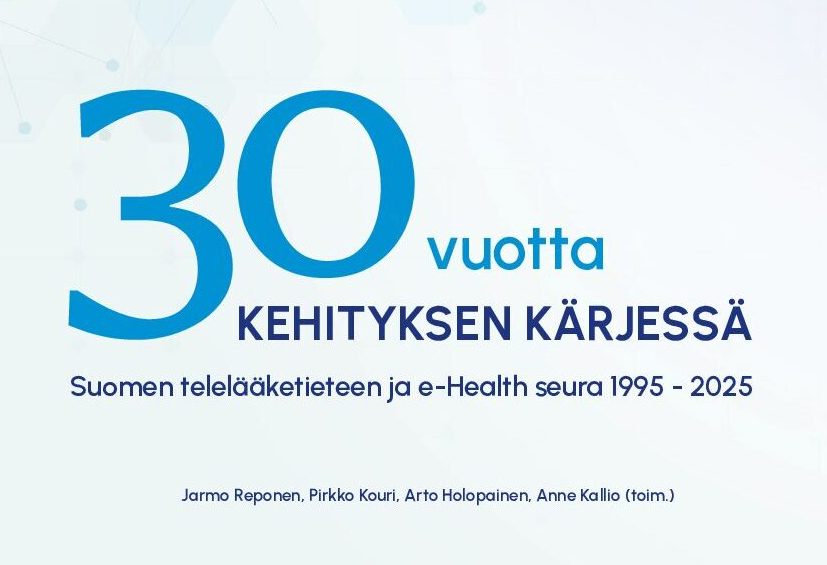
The society's 30-year history (available only in Finnish)
30 VUOTTA KEHITYKSEN KÄRJESSÄ – Suomen telelääketieteen ja e-Health seura 1995-2025, 2025,
ISBN 978-952-65791-1-5 (PDF)
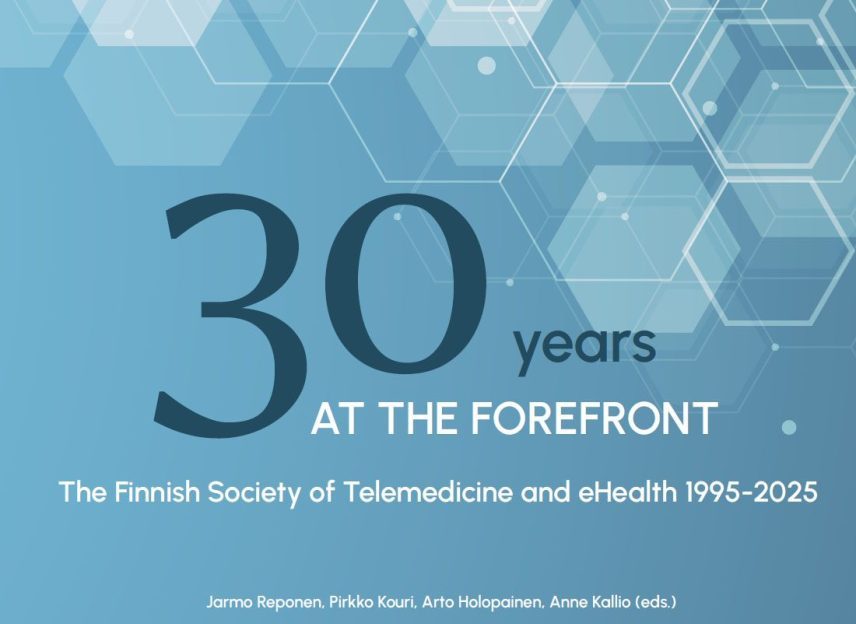
The Society’s 30-Year History
30 Years at the Forefront – The Finnish Society of Telemedicine and eHealth 1995-2025, 2025.
ISBN: 978-952-65791-5-3 (pdf)
Podcasts
eHealth & Telemedicine Today – by STeHS
What’s happening in digital healthcare right now? In this podcast, STeHS brings you conversations on telemedicine, eHealth, and the evolving healthcare landscape—featuring voices from Finland and beyond.

Innovaatiot ja yrittäjyys suomalaisessa eHealthissa
This episode was recorded live at the eHealth2025 Conference, part of the 30th anniversary of the Finnish Society of Telemedicine and eHealth (STeHS). Hosts of this podcast are Titta Venho and Anna Saranlinna.In this discussion, Kalevi Virta, CEO of eWell Oy, and Arto Holopainen, Innovation Director at the City of Kuopio, share their perspectives on the development of the Finnish eHealth ecosystem, with a particular focus on innovation, entrepreneurship, and collaboration.The conversation explores how digital health has evolved in Finland over the past decades, highlighting key milestones such as mobile technologies, national digital health services, and international collaboration. The speakers reflect on the opportunities and challenges faced by startups and innovators in the health technology sector, including funding, regulation, and access to real-world testing environments.The episode also discusses the role of cities, ecosystems, and collaborative networks in supporting innovation, as well as the importance of early user engagement and cross-sector partnerships. Looking ahead, the discussion touches on future trends such as artificial intelligence, data-driven services, and the increasing demand for sustainable and scalable digital health solutions.Finally, the guests share practical advice for entrepreneurs and emphasize the need for stronger strategic leadership, long-term investment, and continued cooperation between public and private sectors to drive meaningful impact in healthcare.Note: This episode is in Finnish.Full transcript is available in https://www.telemedicine.fi/julkaisut/
Vaikuttavuus digitaalisissa terveyspalveluissa
This episode was recorded live at the eHealth2025 Conference, part of the 30th anniversary of the Finnish Society of Telemedicine and eHealth (STeHS). Hosts of this podcast are Titta Venho and Anna Saranlinna.In this discussion, Mika Perttu, Director of Digital Transformation at the City of Helsinki’s Social, Health and Rescue Division, and Minna Saranpää, Customer Manager and Social and Healthcare Specialist at Vivago Oy, explore the topic of impact and effectiveness in digital health and care services.As digitalisation continues to reshape how healthcare services are delivered, used, and evaluated, the conversation focuses on how to ensure that digital solutions truly create value for patients, professionals, and society. The speakers discuss how effectiveness can be defined, measured, and integrated into service development and decision-making.The episode highlights practical examples from both public and private sectors, addressing challenges such as fragmented systems, limited resources, and the need for better data-driven leadership. It also explores the future role of digital tools, including artificial intelligence and remote care, in improving outcomes and enabling more proactive and personalised healthcare services.Note: This episode is in Finnish.Full transcript is available: https://www.telemedicine.fi/julkaisut/
Women around the world in health care digitalisation
This episode was recorded live at the eHealth2025 Conference, part of the 30th anniversary of the Finnish Society of Telemedicine and eHealth (STeHS). Hosts of this podcast are Titta Venho and Anna Saranlinna.In this discussion, Dr Michelle Griffith, President of ISfTeH, a physician specializing in internal, lifestyle, and integrative medicine with over 30 years of clinical experience, and Professor Pirkko Kouri, Vice President of ISfTeH and a Finnish expert in health informatics and digital health education, explore the theme Women Around the World in Healthcare Digitalisation.Together, they reflect on how gender shapes the development, leadership, and use of digital health services across different cultural and global contexts. The conversation highlights both the challenges women face in technology-driven environments and the critical role they play in designing more inclusive, holistic healthcare solutions.The episode also offers insights into international collaboration, leadership experiences, and practical advice for women aiming to make an impact in the rapidly evolving field of telemedicine and eHealth.Full transcript will be available in: https://www.telemedicine.fi/julkaisut/
Jaksot päivittyvät tälle sivulle automaattisesti. Kaikki jaksot myös Spotifyssa.
Conference publications:
- XXXI Kansallinen ja kansainvälinen Telelääketieteen ja eHealth konferenssi, #eHealth2026: Effective digital solutions in health care and social welfare services, 2026, ISBN 978-952-65791-4-6 (PDF)
- XXX Kansallinen telelääketieteen ja eHealth seminaari, #eHealth2025: Strengthening Interoperability and Equality in Digital Health with Nordic Innovations, 2025, ISBN 978-952-65791-3-9 (PDF)
- XXIX National Seminar on Telemedicine and eHealth, #eHealth2024: From Research to Impact on Digital Health and Welfare Services, 2024, ISBN 978-952-69224-9-2 (PDF)
- XXVIII National Telemedicine and eHealth Seminar, #eHealth2023: Human oriented approach in eHealth and digital services, 2023, ISBN 978-952-69224-8-5 (pdf)
- XXVII National Telemedicine and eHealth Seminar, #eHealth2022: Digital Health – from Research to Applied Solutions, 2022, ISBN 978-952-69224-6-1 (PDF)
- XXVI National Telemedicine and eHealth Seminar, #eHealth2021: eHealth in a Lifecycle, 2021, ISBN: 978-952-69224-4-7 (pdf)
- XXV National Telemedicine and eHealth Seminar, eHealth2020: From Dream to Reality, 2020, ISBN: 978-952-69224-2-3 (pdf)
- XXIV National Telemedicine and eHealth Seminar, eHealth2019: Data-Driven Health, 2019, ISBN: 978-952-68112-9-1 (pdf)
- XXII National Telemedicine and eHealth Seminar, eHealth2018: Health communities facing cyber transformation, 2018, ISBN: 978-952-68112-8-4 (pdf)
- XXII National Telemedicine and eHealth Seminar, Win-Win-Win, for citizens, professionals and society, 2017, ISBN: 978-952-68112-6-0 (pdf)
- XXI National Telemedicine and eHealth Seminar, Nordic eHealth2016 Culture of experimentation and digitalisation, 2016, ISBN: 978-952-68112-4-6 (pdf)
- XX National Telemedicine and eHealth Seminar, eHealth, an engine for change, 2015, ISBN: 978-952-68112-2-2 (pdf)
- XIX National Telemedicine and eHealth Seminar, Towards effective eHealth, 2014, ISBN: 978-952-67213-9-2 (pdf)
- XVIII Kansallinen telelääketieteen ja eHealth seminaari: Teknologiatalkoilla parempiin hoitotuloksiin, 2013, ISBN: 978-952-67213-8-5 (pdf)
- XVII Kansallinen telelääketieteen ja eHealth seminaari: Tietoa tarpeeseen, 2012, ISBN: 978-952-67213-6-1 (pdf)
- XVI Kansallinen telelääketieteen ja eHealth seminaari: Maalta maailmalle – Aluemalli terveyspalveluiden kehittämisessä, 2011, ISBN: 978-952-67213-4-7 (pdf)
- XV Kansallinen telelääketieteen ja eHealth seminaari: Katse yli rajojen, 2010, ISBN: 978-952-67213-2-3 (pdf)
- XIV Kansallinen telelääketieteen ja eHealth seminaari: Terveyttä verkosta ja verkostosta, 2009, ISBN: 978-952-67213-0-9 (pdf)
- XIII Kansallinen telelääketieteen ja eHealth seminaari: e-Health kansalaisen palveluksessa, 2008 (pdf)