Publications

Scientific journal:

Finnish Journal of eHealth and eWelfare (FinJeHeW), https://www.finjehew.fi

FinJeHeW is a scientific journal published jointly by the Finnish Society for Telemedicine and eHealth and the Finnish Association for Social and Health Care Informatics since 2009. The journal belongs to publication platform category 1. The ISSN of the journal is 1798-0798.

FinJeHeW welcomes scientific articles and other material related to information technology in social and healthcare services, telemedicine, and eHealth. Author guidelines are available on the journal’s website. The journal is published mainly in Finnish, but it also includes articles, abstracts, and other material in English. Manuscripts are evaluated using a double-referee peer review process. The journal publishes at least four issues per year as an online publication in PDF format. Each issue is freely available online. www.finjehew.fi.

« Kaikki julkaisut

Muut artikkelit

Digimentorointimallit sosiaali- ja terveydenhuollon ammattilaisten digiosaamisen kehittämisessä fi

The role of digital mentoring in developing digital competence among social and health care professionals en

Ahonen, Outi Maria; Tetri, Birgitta; Arifulla, Dinah; Zadraks, Heidi; Id-Korhonen, Annamaija; Hirvasniemi, Riikka; Lähesmaa, Jukka; Kinnunen, Ulla-Mari

Vol 18 Nro 2 (2026)s. 245–252doi: 10.23996/fjhw.179029Open Access

Tiivistelmä

Digitalisaatio ja teknologia ovat keskeisiä keinoja julkisten palvelujen kehittämisessä. Hallitusohjelma painottaa sosiaali- ja terveydenhuollon ammattilaisten digiosaamisen vahvistamista, koska se parantaa palvelujen laatua, turvallisuutta ja saatavuutta.

Artikkelin tarkoituksena on kuvata digimentorointimallin merkitystä sosiaali- ja terveydenhuollon ammattilaisten digiosaamisen tukena. Tavoitteena on lisätä ymmärrystä digimentoroinnista ja erilaisista digimentorointimalleista sekä edistää digimentoreiden valtakunnallista käyttöönottoa työyhteisöissä.

Aineisto koottiin DigiNet‑verkoston vuoden 2025 työpajassa, jossa osallistujat tarkastelivat hyvinvointialueilla käytössä olevia digimentorointimalleja ja kirjasivat havaintonsa yhteiselle alustalle; lisäksi sitä täydennettiin kirjallisuudella ja julkisilla kuvauksilla muista käytännöistä. Aineisto analysoitiin laadullisen sisällönanalyysin menetelmin.

Työpajassa esiteltiin neljän hyvinvointialueen digimentorointimallit. Lisäksi artikkelissa kuvataan muita digimentorointimalleja, joista on saatu tietoa eri lähteistä. Työpajan osallistujat kirjasivat näkemyksiään digimentoroinnista Padlet-alustalle. Aineisto analysoitiin DigiNetin koordinaatioryhmässä.

Tulokset jäsentyivät viiteen osa-alueeseen: toiminnan organisointi ja rakenteet, roolit ja vastuut, motivaatio ja osaamisen tunnustaminen, yhteisöllisyys ja vertaisoppiminen sekä haasteet ja kehittämistarpeet. Digimentorointimallin onnistumisen edellytyksiksi tunnistettiin selkeä toiminnan organisointi, roolien ja vastuiden määrittely sekä digimentorien motivaation ja osaamisen tunnustaminen. Lisäksi yhteisöllisyys ja vertaisoppiminen tukevat sekä uuden teknologian omaksumista että ohjausosaamisen kehittymistä.

Tulosten perusteella digimentorointimallin jalkauttaminen edellyttää sekä kansallista että alueellista yhteistyötä. Työelämän ja oppilaitosten välinen yhteistyö on keskeistä digiosaamisen kehittämisessä ja ylläpitämisessä. Digiosaamisen johtaminen on tärkeä osa organisaatioiden vastuuta. Se tukee työyhteisöjen kykyä vastata muuttuviin palvelutarpeisiin.

Abstract (English)

Digitalization and technology are central means for the development of public services. Finland’s Government Programme emphasizes strengthening the digital competencies of social and health care professionals, as this contributes to improved service quality, safety, and accessibility. The purpose of this article is to describe the significance of a digital mentoring model in supporting the digital competence of social and health care professionals. The aim is to increase understanding of digital mentoring and its different models and to promote the nationwide implementation of digital mentors in workplaces.

The data were collected during a DigiNet network workshop held in 2025, where participants examined digital mentoring models currently in use across wellbeing services counties and documented their observations on a shared digital platform. The data were further complemented with relevant literature and publicly available descriptions of other digital mentoring practices. The data were analyzed using qualitative content analysis methods.

During the workshop, digital mentoring models from four wellbeing services counties were presented. In addition, the article describes other digital mentoring models identified through various sources. Workshop participants recorded their views on digital mentoring using the Padlet platform, and DigiNet’s coordination group analyzed the data.

The results were structured into five thematic areas: organization and structures of the activity, roles and responsibilities, motivation and recognition of competence, sense of community and peer learning, as well as challenges and development needs. Key prerequisites for the successful implementation of a digital mentoring model included clear organizational structures, well-defined roles and responsibilities, and recognition of digital mentors' motivation and expertise. Furthermore, community-building and peer learning were found to support both the adoption of new technologies and the development of mentoring and facilitation skills.

Based on the findings, implementing and scaling digital mentoring models requires both national and regional collaboration. Cooperation between working life organizations and educational institutions is essential for the development and maintenance of digital competence. Leadership in digital competence development is a key organizational responsibility. It supports the capacity of work communities to respond to changing service needs.

Avainsanat

mentoringdigital competencetelehealthhealthcare workforcecollaborative learningorganizational change

Kanoninen lähde ja PDF: journal.fi. Tätä artikkelia ei ole kopioitu tälle palvelimelle.
Lisenssi: https://creativecommons.org/licenses/by/4.0

The society's 30-year history (available only in Finnish)

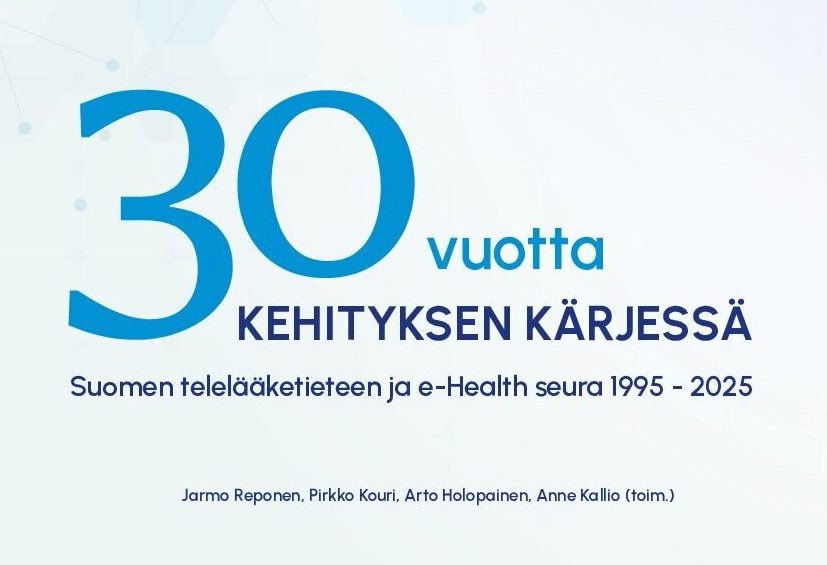
30 VUOTTA KEHITYKSEN KÄRJESSÄ – Suomen telelääketieteen ja e-Health seura 1995-2025,  2025,
ISBN 978-952-65791-1-5 (PDF)

The Society’s 30-Year History

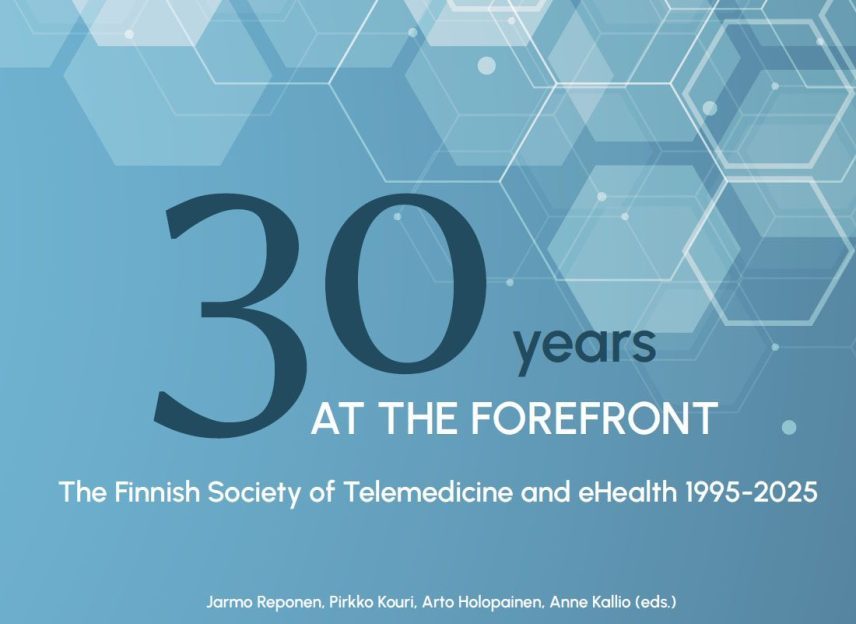
30 Years at the Forefront – The Finnish Society of Telemedicine and eHealth 1995-2025, 2025.
ISBN: 978-952-65791-5-3 (pdf)

Podcasts

Suomen Telelääketieteen ja e-Health seura · Podcast

eHealth & Telemedicine Today – by STeHS

What’s happening in digital healthcare right now? In this podcast, STeHS brings you conversations on telemedicine, eHealth, and the evolving healthcare landscape—featuring voices from Finland and beyond.

Jakso 3 · 13.6.2026 · 33 min

Innovaatiot ja yrittäjyys suomalaisessa eHealthissa

This episode was recorded live at the eHealth2025 Conference, part of the 30th anniversary of the Finnish Society of Telemedicine and eHealth (STeHS). Hosts of this podcast are Titta Venho and Anna Saranlinna.In this discussion, Kalevi Virta, CEO of eWell Oy, and Arto Holopainen, Innovation Director at the City of Kuopio, share their perspectives on the development of the Finnish eHealth ecosystem, with a particular focus on innovation, entrepreneurship, and collaboration.The conversation explores how digital health has evolved in Finland over the past decades, highlighting key milestones such as mobile technologies, national digital health services, and international collaboration. The speakers reflect on the opportunities and challenges faced by startups and innovators in the health technology sector, including funding, regulation, and access to real-world testing environments.The episode also discusses the role of cities, ecosystems, and collaborative networks in supporting innovation, as well as the importance of early user engagement and cross-sector partnerships. Looking ahead, the discussion touches on future trends such as artificial intelligence, data-driven services, and the increasing demand for sustainable and scalable digital health solutions.Finally, the guests share practical advice for entrepreneurs and emphasize the need for stronger strategic leadership, long-term investment, and continued cooperation between public and private sectors to drive meaningful impact in healthcare.Note: This episode is in Finnish.Full transcript is available in https://www.telemedicine.fi/julkaisut/
Spotifyssa
Jakso 2 · 6.6.2026 · 32 min

Vaikuttavuus digitaalisissa terveyspalveluissa

This episode was recorded live at the eHealth2025 Conference, part of the 30th anniversary of the Finnish Society of Telemedicine and eHealth (STeHS). Hosts of this podcast are Titta Venho and Anna Saranlinna.In this discussion, Mika Perttu, Director of Digital Transformation at the City of Helsinki’s Social, Health and Rescue Division, and Minna Saranpää, Customer Manager and Social and Healthcare Specialist at Vivago Oy, explore the topic of impact and effectiveness in digital health and care services.As digitalisation continues to reshape how healthcare services are delivered, used, and evaluated, the conversation focuses on how to ensure that digital solutions truly create value for patients, professionals, and society. The speakers discuss how effectiveness can be defined, measured, and integrated into service development and decision-making.The episode highlights practical examples from both public and private sectors, addressing challenges such as fragmented systems, limited resources, and the need for better data-driven leadership. It also explores the future role of digital tools, including artificial intelligence and remote care, in improving outcomes and enabling more proactive and personalised healthcare services.Note: This episode is in Finnish.Full transcript is available: https://www.telemedicine.fi/julkaisut/
Spotifyssa
Jakso 1 · 31.5.2026 · 27 min

Women around the world in health care digitalisation

This episode was recorded live at the eHealth2025 Conference, part of the 30th anniversary of the Finnish Society of Telemedicine and eHealth (STeHS). Hosts of this podcast are Titta Venho and Anna Saranlinna.In this discussion, Dr Michelle Griffith, President of ISfTeH, a physician specializing in internal, lifestyle, and integrative medicine with over 30 years of clinical experience, and Professor Pirkko Kouri, Vice President of ISfTeH and a Finnish expert in health informatics and digital health education, explore the theme Women Around the World in Healthcare Digitalisation.Together, they reflect on how gender shapes the development, leadership, and use of digital health services across different cultural and global contexts. The conversation highlights both the challenges women face in technology-driven environments and the critical role they play in designing more inclusive, holistic healthcare solutions.The episode also offers insights into international collaboration, leadership experiences, and practical advice for women aiming to make an impact in the rapidly evolving field of telemedicine and eHealth.Full transcript will be available in: https://www.telemedicine.fi/julkaisut/

Spotifyssa

Jaksot päivittyvät tälle sivulle automaattisesti. Kaikki jaksot myös Spotifyssa.

Conference publications:

  • XXXI Kansallinen ja kansainvälinen Telelääketieteen ja eHealth konferenssi, #eHealth2026: Effective digital solutions in health care and social welfare services, 2026, ISBN 978-952-65791-4-6 (PDF) 
  • XXX Kansallinen telelääketieteen ja eHealth seminaari, #eHealth2025: Strengthening Interoperability and Equality in Digital Health with Nordic Innovations, 2025, ISBN 978-952-65791-3-9 (PDF)
  • XXIX National Seminar on Telemedicine and eHealth, #eHealth2024: From Research to Impact on Digital Health and Welfare Services, 2024, ISBN 978-952-69224-9-2 (PDF)
  • XXVIII National Telemedicine and eHealth Seminar, #eHealth2023: Human oriented approach in eHealth and digital services, 2023, ISBN 978-952-69224-8-5 (pdf)
  • XXVII National Telemedicine and eHealth Seminar, #eHealth2022: Digital Health – from Research to Applied Solutions, 2022, ISBN 978-952-69224-6-1 (PDF)
  • XXVI National Telemedicine and eHealth Seminar, #eHealth2021: eHealth in a Lifecycle, 2021, ISBN: 978-952-69224-4-7 (pdf)
  • XXV National Telemedicine and eHealth Seminar, eHealth2020: From Dream to Reality, 2020, ISBN: 978-952-69224-2-3 (pdf)
  • XXIV National Telemedicine and eHealth Seminar, eHealth2019: Data-Driven Health, 2019, ISBN: 978-952-68112-9-1 (pdf)
  • XXII National Telemedicine and eHealth Seminar, eHealth2018: Health communities facing cyber transformation, 2018, ISBN: 978-952-68112-8-4 (pdf)
  • XXII National Telemedicine and eHealth Seminar, Win-Win-Win, for citizens, professionals and society, 2017, ISBN: 978-952-68112-6-0 (pdf)
  • XXI National Telemedicine and eHealth Seminar, Nordic eHealth2016 Culture of experimentation and digitalisation, 2016, ISBN: 978-952-68112-4-6 (pdf)
  • XX National Telemedicine and eHealth Seminar, eHealth, an engine for change, 2015, ISBN: 978-952-68112-2-2 (pdf)
  • XIX National Telemedicine and eHealth Seminar, Towards effective eHealth, 2014, ISBN: 978-952-67213-9-2 (pdf)
  • XVIII Kansallinen telelääketieteen ja eHealth seminaari: Teknologiatalkoilla parempiin hoitotuloksiin, 2013, ISBN: 978-952-67213-8-5 (pdf)
  • XVII Kansallinen telelääketieteen ja eHealth seminaari: Tietoa tarpeeseen, 2012, ISBN: 978-952-67213-6-1 (pdf)
  • XVI Kansallinen telelääketieteen ja eHealth seminaari: Maalta maailmalle – Aluemalli terveyspalveluiden kehittämisessä, 2011, ISBN: 978-952-67213-4-7 (pdf)
  • XV Kansallinen telelääketieteen ja eHealth seminaari: Katse yli rajojen, 2010, ISBN: 978-952-67213-2-3 (pdf)
  • XIV Kansallinen telelääketieteen ja eHealth seminaari: Terveyttä verkosta ja verkostosta, 2009, ISBN: 978-952-67213-0-9 (pdf)
  • XIII Kansallinen telelääketieteen ja eHealth seminaari: e-Health kansalaisen palveluksessa, 2008 (pdf)
Scroll to Top