Publications

Scientific journal:

Finnish Journal of eHealth and eWelfare (FinJeHeW), https://www.finjehew.fi

FinJeHeW is a scientific journal published jointly by the Finnish Society for Telemedicine and eHealth and the Finnish Association for Social and Health Care Informatics since 2009. The journal belongs to publication platform category 1. The ISSN of the journal is 1798-0798.

FinJeHeW welcomes scientific articles and other material related to information technology in social and healthcare services, telemedicine, and eHealth. Author guidelines are available on the journal’s website. The journal is published mainly in Finnish, but it also includes articles, abstracts, and other material in English. Manuscripts are evaluated using a double-referee peer review process. The journal publishes at least four issues per year as an online publication in PDF format. Each issue is freely available online. www.finjehew.fi.

« Kaikki julkaisut

Tieteelliset artikkelit

Vapaaehtoisen vaaratapahtumajärjestelmän kehittäminen korkean kehitysasteen potilastietojärjestelmissä fi

Developing voluntary patient safety incident reporting of high-maturity electronic health records en

Palojoki, Sari; Skants, Noora; Reponen, Elina; Vakkuri, Anne; Saranto, Kaija; Vuokko, Riikka

Vol 14 Nro 2 (2022)s. 226–242doi: 10.23996/fjhw.110823Open Access

Tiivistelmä

Vaaratapahtumien raportointia pidetään potilasturvallisuutta parantavien toimien käynnistämisen kulmakivenä. Korkean kehitysasteen potilastietojärjestelmiin liittyvissä vaaratapahtumissa on tunnistettu tarve kehittää toimintaympäristöömme soveltuva luokitus, joka hyödyttäisi tapahtumien tunnistamista, rakenteista raportoimista ja analysointia. Tutkimuksella pyrittiin vaaratapahtumien raportointijärjestelmän käytön ja tiedon hyödynnettävyyden edistämiseen potilastietojärjestelmäturvallisuuden osa-alueella. Tavoitteena oli kuvata vaaratapahtumaluokituksen sisältöä ja perustella luokituskehitystyössä tehtyjä ratkaisuja, jotta raportointia voidaan toteuttaa kehittyneimpien potilastietojärjestelmien ongelmatilanteissa ja vaaratapahtumissa. Luokituskehityksen lähtökohtana olivat potilastietojärjestelmien virhetyyppien aiemmat tutkimustulokset, joissa vaaratapahtumailmoitusten kuvauksia analysoitiin ja luokiteltiin koskien välittömästi uuden potilastietojärjestelmän käyttöönoton jälkeistä kuutta kuukautta. Luokittelutyön ohjaavat periaatteet perustuivat luokituksen ominaispiirteisiin, käyttötarkoitukseen ja käytettävyyteen. Luokituksen 13 pääluokkaa kuvaavat korkean kehitysasteen potilastietojärjestelmän kliinisen käytön aikana syntyviä vaaratapahtumia, joista suurimmat luokat aineistossa olivat rajapinta-, käytettävyys-, työnkulku-, lääkitysosio- ja kirjaamisongelmat. Puolta luokituksen pääluokkaa täydentää 2-6 alaluokkaa, jolloin lopputuloksena oli 35 luokkaa. Tulokset kuvastavat sekä teoreettisia ja metodologisia tavoitteita luokituksen sisällölliseksi ja laadulliseksi kehittämiseksi että käytännöllisiä tavoitteita raportoinnin kehittämiseksi. Kliinisestä näkökulmasta laadituilla ongelmatyypin kuvauksilla on tarkoituksena ohjata tapahtumien luokittelemista käytännössä. Tutkimus tuotti teoreettis-käytännöllisen tuloksen luokitustutkimuksen alueella. Kehitettyä luokitusta voidaan soveltaa korkean kehitysasteen potilastietojärjestelmiin liittyvien vaaratapahtumien raportoinnissa ja analysoinnissa. Tuloksissa kuvataan luokkien erityispiirteet ja erottavat tekijät suhteessa muihin luokkiin perustellen tehtyjä ratkaisuja. Luokituksen käytön oletetaan tukevan vaaratapahtumien raportointia ja tiedon käyttämistä. Jatkossa edellytetään luokituksen systemaattista ylläpitoa ja kehittämistä empiiriseen aineistoon pohjautuen, jotta tiedon laatu kehittyisi edelleen tukemaan potilasturvallisuutta potilastietojärjestelmien käytössä.

Abstract (English)

Patient safety incident reporting is currently considered a cornerstone of efforts to improve patient safety. For incidents related to high-maturity electronic health record systems (EHRs), there is a need to develop a classification appropriate to clinical operating environment that would benefit the identification of incidents and enhance structured reporting and analysis. The overall aim of the study was to advance use of a voluntary patient safety incident reporting system and to develop the usability of reports in the field of EHR safety. The aim was to categorize and reason patient safety incidents related to high-maturity EHRs so that the classification responds to the characteristics of errors in these systems. Previous research results on the error types in EHRs and incident reports were analyzed and classified for a six-month period immediately after the implementation of the EHRs. The guiding principles of the classification work were based on the features, usage and usability of the classification. The 13 main classes describe the incidents that occur during the clinical use of the advanced EHRs. The largest instance of classes in this dataset were interface, usability, workflow, medication section, and documentation problems. Half of the main classes are supplemented by 2 to 6 subclasses, resulting in 35 classes. The results reflect both theoretical and methodological objectives for the qualitative and contentual development of the classification and practical objectives for the development of reporting. From a clinical point of view, the problem type descriptions are intended to guide the classification of incidents in practice. The study produced a theoretical-practical result in the field of classification research. The classification can be applied to the reporting and analysis of incidents related to high-maturity EHRs. The results highlight the specific features of the category and the distinguishing factors in relation to the other categories, and reasoning for these outcomes. The use of classification is assumed to support incident reporting and use of data. In the future, systematic maintenance and development of the classification based on empirical data will be required in order to further develop the quality of data to support patient safety in the use of EHRs.

Avainsanat

LuokitusLuokkaPotilastietojärjestelmäPotilasturvallisuusRaportointi

Kanoninen lähde ja PDF: journal.fi. Tätä artikkelia ei ole kopioitu tälle palvelimelle.
Lisenssi: http://creativecommons.org/licenses/by-nc-nd/4.0

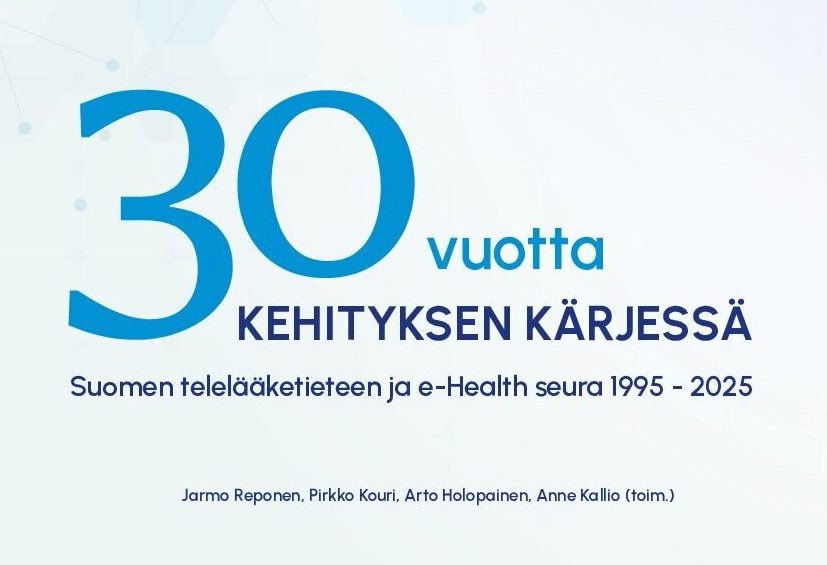
The society's 30-year history (available only in Finnish)

30 VUOTTA KEHITYKSEN KÄRJESSÄ – Suomen telelääketieteen ja e-Health seura 1995-2025,  2025,
ISBN 978-952-65791-1-5 (PDF)

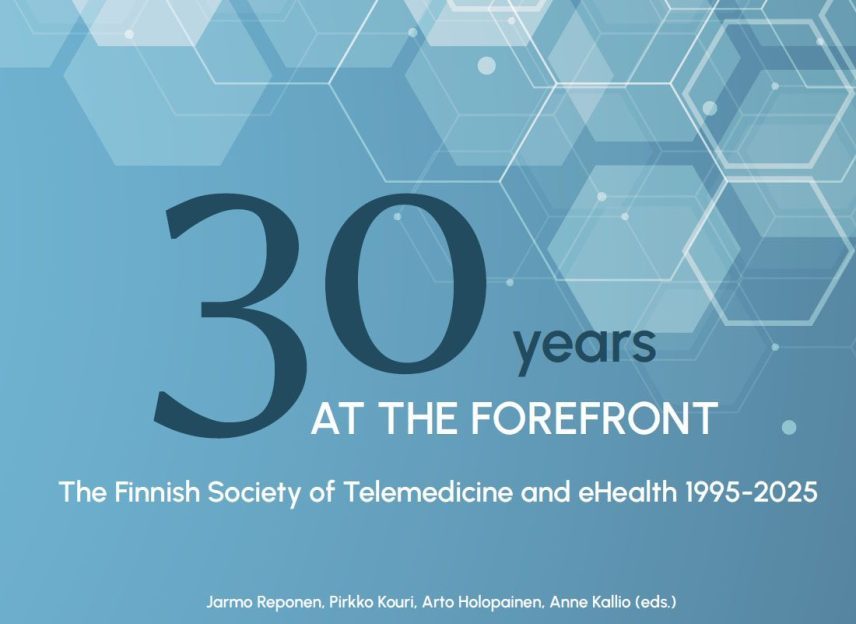
The Society’s 30-Year History

30 Years at the Forefront – The Finnish Society of Telemedicine and eHealth 1995-2025, 2025.
ISBN: 978-952-65791-5-3 (pdf)

Podcasts

Suomen Telelääketieteen ja e-Health seura · Podcast

eHealth & Telemedicine Today – by STeHS

What’s happening in digital healthcare right now? In this podcast, STeHS brings you conversations on telemedicine, eHealth, and the evolving healthcare landscape—featuring voices from Finland and beyond.

Jakso 3 · 13.6.2026 · 33 min

Innovaatiot ja yrittäjyys suomalaisessa eHealthissa

This episode was recorded live at the eHealth2025 Conference, part of the 30th anniversary of the Finnish Society of Telemedicine and eHealth (STeHS). Hosts of this podcast are Titta Venho and Anna Saranlinna.In this discussion, Kalevi Virta, CEO of eWell Oy, and Arto Holopainen, Innovation Director at the City of Kuopio, share their perspectives on the development of the Finnish eHealth ecosystem, with a particular focus on innovation, entrepreneurship, and collaboration.The conversation explores how digital health has evolved in Finland over the past decades, highlighting key milestones such as mobile technologies, national digital health services, and international collaboration. The speakers reflect on the opportunities and challenges faced by startups and innovators in the health technology sector, including funding, regulation, and access to real-world testing environments.The episode also discusses the role of cities, ecosystems, and collaborative networks in supporting innovation, as well as the importance of early user engagement and cross-sector partnerships. Looking ahead, the discussion touches on future trends such as artificial intelligence, data-driven services, and the increasing demand for sustainable and scalable digital health solutions.Finally, the guests share practical advice for entrepreneurs and emphasize the need for stronger strategic leadership, long-term investment, and continued cooperation between public and private sectors to drive meaningful impact in healthcare.Note: This episode is in Finnish.Full transcript is available in https://www.telemedicine.fi/julkaisut/
Spotifyssa
Jakso 2 · 6.6.2026 · 32 min

Vaikuttavuus digitaalisissa terveyspalveluissa

This episode was recorded live at the eHealth2025 Conference, part of the 30th anniversary of the Finnish Society of Telemedicine and eHealth (STeHS). Hosts of this podcast are Titta Venho and Anna Saranlinna.In this discussion, Mika Perttu, Director of Digital Transformation at the City of Helsinki’s Social, Health and Rescue Division, and Minna Saranpää, Customer Manager and Social and Healthcare Specialist at Vivago Oy, explore the topic of impact and effectiveness in digital health and care services.As digitalisation continues to reshape how healthcare services are delivered, used, and evaluated, the conversation focuses on how to ensure that digital solutions truly create value for patients, professionals, and society. The speakers discuss how effectiveness can be defined, measured, and integrated into service development and decision-making.The episode highlights practical examples from both public and private sectors, addressing challenges such as fragmented systems, limited resources, and the need for better data-driven leadership. It also explores the future role of digital tools, including artificial intelligence and remote care, in improving outcomes and enabling more proactive and personalised healthcare services.Note: This episode is in Finnish.Full transcript is available: https://www.telemedicine.fi/julkaisut/
Spotifyssa
Jakso 1 · 31.5.2026 · 27 min

Women around the world in health care digitalisation

This episode was recorded live at the eHealth2025 Conference, part of the 30th anniversary of the Finnish Society of Telemedicine and eHealth (STeHS). Hosts of this podcast are Titta Venho and Anna Saranlinna.In this discussion, Dr Michelle Griffith, President of ISfTeH, a physician specializing in internal, lifestyle, and integrative medicine with over 30 years of clinical experience, and Professor Pirkko Kouri, Vice President of ISfTeH and a Finnish expert in health informatics and digital health education, explore the theme Women Around the World in Healthcare Digitalisation.Together, they reflect on how gender shapes the development, leadership, and use of digital health services across different cultural and global contexts. The conversation highlights both the challenges women face in technology-driven environments and the critical role they play in designing more inclusive, holistic healthcare solutions.The episode also offers insights into international collaboration, leadership experiences, and practical advice for women aiming to make an impact in the rapidly evolving field of telemedicine and eHealth.Full transcript will be available in: https://www.telemedicine.fi/julkaisut/

Spotifyssa

Jaksot päivittyvät tälle sivulle automaattisesti. Kaikki jaksot myös Spotifyssa.

Conference publications:

  • XXXI Kansallinen ja kansainvälinen Telelääketieteen ja eHealth konferenssi, #eHealth2026: Effective digital solutions in health care and social welfare services, 2026, ISBN 978-952-65791-4-6 (PDF) 
  • XXX Kansallinen telelääketieteen ja eHealth seminaari, #eHealth2025: Strengthening Interoperability and Equality in Digital Health with Nordic Innovations, 2025, ISBN 978-952-65791-3-9 (PDF)
  • XXIX National Seminar on Telemedicine and eHealth, #eHealth2024: From Research to Impact on Digital Health and Welfare Services, 2024, ISBN 978-952-69224-9-2 (PDF)
  • XXVIII National Telemedicine and eHealth Seminar, #eHealth2023: Human oriented approach in eHealth and digital services, 2023, ISBN 978-952-69224-8-5 (pdf)
  • XXVII National Telemedicine and eHealth Seminar, #eHealth2022: Digital Health – from Research to Applied Solutions, 2022, ISBN 978-952-69224-6-1 (PDF)
  • XXVI National Telemedicine and eHealth Seminar, #eHealth2021: eHealth in a Lifecycle, 2021, ISBN: 978-952-69224-4-7 (pdf)
  • XXV National Telemedicine and eHealth Seminar, eHealth2020: From Dream to Reality, 2020, ISBN: 978-952-69224-2-3 (pdf)
  • XXIV National Telemedicine and eHealth Seminar, eHealth2019: Data-Driven Health, 2019, ISBN: 978-952-68112-9-1 (pdf)
  • XXII National Telemedicine and eHealth Seminar, eHealth2018: Health communities facing cyber transformation, 2018, ISBN: 978-952-68112-8-4 (pdf)
  • XXII National Telemedicine and eHealth Seminar, Win-Win-Win, for citizens, professionals and society, 2017, ISBN: 978-952-68112-6-0 (pdf)
  • XXI National Telemedicine and eHealth Seminar, Nordic eHealth2016 Culture of experimentation and digitalisation, 2016, ISBN: 978-952-68112-4-6 (pdf)
  • XX National Telemedicine and eHealth Seminar, eHealth, an engine for change, 2015, ISBN: 978-952-68112-2-2 (pdf)
  • XIX National Telemedicine and eHealth Seminar, Towards effective eHealth, 2014, ISBN: 978-952-67213-9-2 (pdf)
  • XVIII Kansallinen telelääketieteen ja eHealth seminaari: Teknologiatalkoilla parempiin hoitotuloksiin, 2013, ISBN: 978-952-67213-8-5 (pdf)
  • XVII Kansallinen telelääketieteen ja eHealth seminaari: Tietoa tarpeeseen, 2012, ISBN: 978-952-67213-6-1 (pdf)
  • XVI Kansallinen telelääketieteen ja eHealth seminaari: Maalta maailmalle – Aluemalli terveyspalveluiden kehittämisessä, 2011, ISBN: 978-952-67213-4-7 (pdf)
  • XV Kansallinen telelääketieteen ja eHealth seminaari: Katse yli rajojen, 2010, ISBN: 978-952-67213-2-3 (pdf)
  • XIV Kansallinen telelääketieteen ja eHealth seminaari: Terveyttä verkosta ja verkostosta, 2009, ISBN: 978-952-67213-0-9 (pdf)
  • XIII Kansallinen telelääketieteen ja eHealth seminaari: e-Health kansalaisen palveluksessa, 2008 (pdf)
Scroll to Top