Publications

Scientific journal:

Finnish Journal of eHealth and eWelfare (FinJeHeW), https://www.finjehew.fi

FinJeHeW is a scientific journal published jointly by the Finnish Society for Telemedicine and eHealth and the Finnish Association for Social and Health Care Informatics since 2009. The journal belongs to publication platform category 1. The ISSN of the journal is 1798-0798.

FinJeHeW welcomes scientific articles and other material related to information technology in social and healthcare services, telemedicine, and eHealth. Author guidelines are available on the journal’s website. The journal is published mainly in Finnish, but it also includes articles, abstracts, and other material in English. Manuscripts are evaluated using a double-referee peer review process. The journal publishes at least four issues per year as an online publication in PDF format. Each issue is freely available online. www.finjehew.fi.

« Kaikki julkaisut

Tieteelliset artikkelit

Tietojärjestelmät ja työhyvinvointi – terveydenhuollon ammattilaisten näkemyksiä fi

Vehko, Tuulikki; Hyppönen, Hannele; Ryhänen, Miia; Tuukkanen, Johanna; Ketola, Eeva; Heponiemi, Tarja

Vol 10 Nro 1 (2018)s. 143-163doi: 10.23996/fjhw.65387Open Access

Tiivistelmä

Potilastietojärjestelmien toimivuus on terveydenhuollon ammattilaisten työn sujuvuuden kannalta tärkeää. Tutkimme fokusryhmähaastattelujen avulla ammattilaisten työprosesseja, tietojärjestelmien käyttökokemuksia ja stressaavuutta, sekä niiden vaikutuksia työhyvinvointiin. Haastattelujen analyysi toteutettiin käyttäen sisällön analyysiä.

Tekniset ongelmat kuten käyttökatkokset ja hitaus, moniin järjestelmiin vaadittava kirjautuminen ja monien järjestelmien yhtäaikaiskäyttö aiheuttivat terveydenhuollon ammattilaisille stressiä. Organisaatioiden välistä yhteistyötä hidasti sähköisen potilastiedon puuttuminen. Puutteelliset lääkitysmerkinnät aiheuttivat stressiä työntekijöille sekä huolen potilasturvallisuudesta. Potilastiedon kirjaamiseen ei aina tuntunut riittävän aikaa, jolloin yritettiin kirjata lyhyesti tai työvuoron päätteeksi. Työn keskeytysten ja eri näkymien välillä hyppelyn koettiin häiritsevän kirjaamista. Ohjelmien välisiä toiminnallisuuksia toivottiin lisää, jotta kirjaamiseen käytetty aika vähenisi ja kertakirjaaminen riittäisi.

Kokonaisuudessaan tietojärjestelmiä ja niihin kirjaamista ei kuitenkaan pidetty työn suurimpana stressitekijänä, vaan potilastyöstä tai ajoittaisesta työryppäästä aiheutuva rasitus oli monen työntekijän kohdalla ensisijaista. Erääksi työhyvinvoinnin parantamismahdollisuudeksi nimettiin koulutus, joka antaisi valmiuksia muuttuvaan digityöhön. Terveydenhuollon ammattilaiset kokivat, että palautteen antamisen mahdollisuudet tietojärjestelmistä olivat vähäiset.

Työn sujuvuuden (tehokkuuden ja laadun) ja alan houkuttelevuuden kannalta olisi keskeistä, että terveydenhuollon työntekijöiden työhyvinvoinnista huolehdittaisiin poistamalla tunnistettuja stressitekijöitä: parantamalla tietojärjestelmien vakautta, kehittämällä kertakirjautumista sekä tiedonhaun ja kirjaamisen käytettävyyttä, tarjoamalla kirjaamiseen rauhallinen työympäristö ja parantamalla luotettavan, kattavan ja ajantasaisen tiedon saatavuutta muista organisaatioista. Ammattilaisten antaman palautteen tulisi näkyä järjestelmien kehittämisessä, ja järjestelmien käyttötaitoa ja digityötapoja pitäisi kehittää organisaatioissa systemaattisesti. Jatkotutkimuksissa on tarpeen seurata terveydenhuollon ammattilaisten kokemuksia organisaatioiden välisen tiedonkulun kehittymisestä.

Abstract (English)

Usability of clinical information and communication technology (ICT) systems is essential for professionals working in labour-intensive health care. We examined healthcare professionals’ experiences of ICT and their stressfulness and associations on well-being at work. We performed focus group interviews, and analysed data with content analysis.

Technical problems, such as downtime and slowness, multiple sign-in required for multiple systems, and the use of several systems simultaneously, caused stress. In the inter-organizational co-operation, the lack of electronic patient information slowed down work. Incomplete documentation of medication caused stress for professionals and concern for patient safety. Lack of time for documentation was reported, and the professionals attempted to record patient data either briefly or at the end of the workshift.

The interruptions and the need to use multiple views while recording patient data, were considered disruptive. The professionals hoped that functionalities between programs were improved in order to save time from recording. Overall, however, recording was not considered to be the major stress factor for the work. The burden of patient work or occasional excessive workload was the priority for many employees. Approaching work related wellbeing connected in some respects gaps in the ICT knowledge. Healthcare professionals reflected that their potential for feedback from ICT was limited.

In order to ensure the smoothness of work-processes (efficiency and quality) the well-being of healthcare professionals should be focused on. The toolkit for promoting the ICT-related well-being of healthcare professionals should include: improving the stability of information systems, developing single sign-on, developing usability of documentation and retrieval of patient data, providing a peaceful documentation environment, and improving access to comprehensive and timely patient data from other organizations. Feedback from professionals should be reflected in the development of ICTs, and ICT skills should be systematically developed in organizations.

Avainsanat

haastattelut [http://www.yso.fi/onto/yso/p17111]fokusryhmähaastattelut [http://www.yso.fi/onto/yso/p28316]terveydenhuollon henkilöstöpotilastietojärjestelmät [http://www.yso.fi/onto/yso/p28119]psykososiaaliseen työympäristöön liittyvät terveysriskit

Kanoninen lähde ja PDF: journal.fi. Tätä artikkelia ei ole kopioitu tälle palvelimelle.
Lisenssi: https://creativecommons.org/licenses/by-nc-nd/4.0

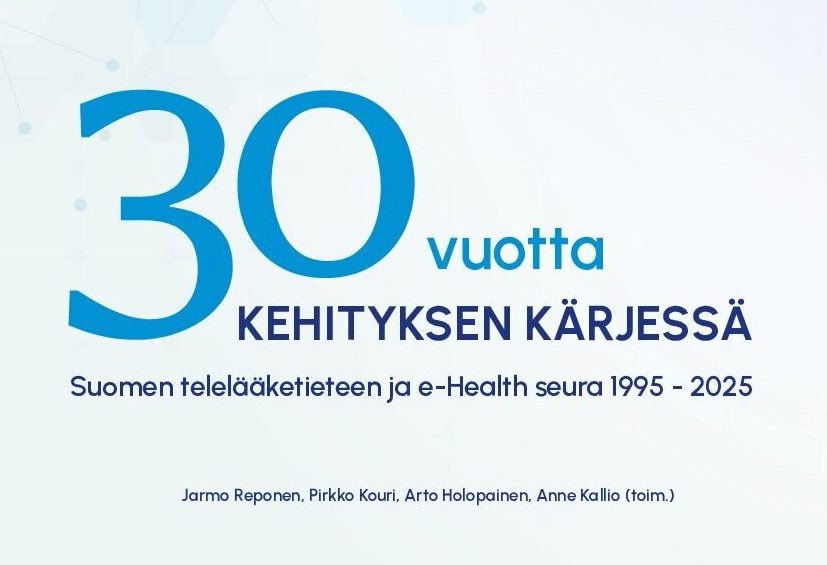
The society's 30-year history (available only in Finnish)

30 VUOTTA KEHITYKSEN KÄRJESSÄ – Suomen telelääketieteen ja e-Health seura 1995-2025,  2025,
ISBN 978-952-65791-1-5 (PDF)

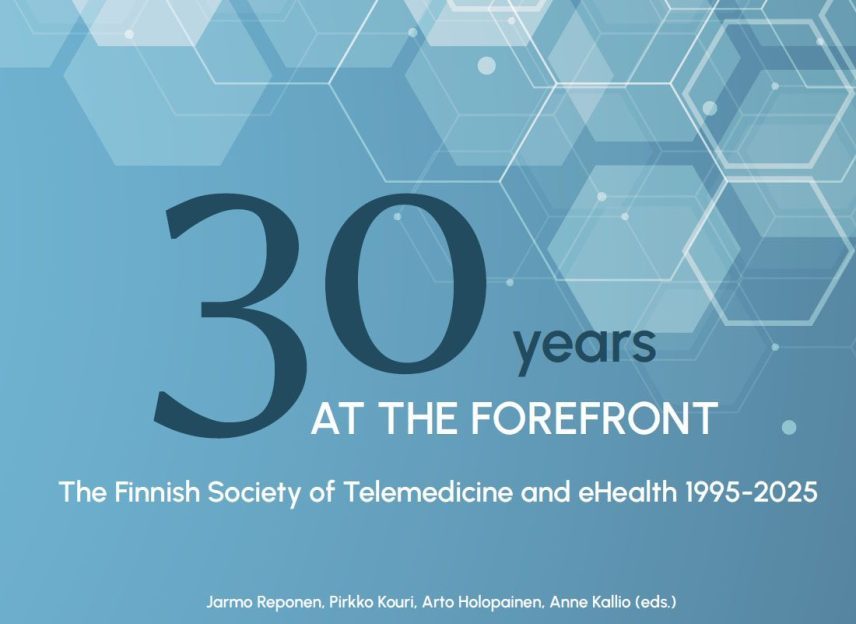
The Society’s 30-Year History

30 Years at the Forefront – The Finnish Society of Telemedicine and eHealth 1995-2025, 2025.
ISBN: 978-952-65791-5-3 (pdf)

Podcasts

Suomen Telelääketieteen ja e-Health seura · Podcast

eHealth & Telemedicine Today – by STeHS

What’s happening in digital healthcare right now? In this podcast, STeHS brings you conversations on telemedicine, eHealth, and the evolving healthcare landscape—featuring voices from Finland and beyond.

Jakso 3 · 13.6.2026 · 33 min

Innovaatiot ja yrittäjyys suomalaisessa eHealthissa

This episode was recorded live at the eHealth2025 Conference, part of the 30th anniversary of the Finnish Society of Telemedicine and eHealth (STeHS). Hosts of this podcast are Titta Venho and Anna Saranlinna.In this discussion, Kalevi Virta, CEO of eWell Oy, and Arto Holopainen, Innovation Director at the City of Kuopio, share their perspectives on the development of the Finnish eHealth ecosystem, with a particular focus on innovation, entrepreneurship, and collaboration.The conversation explores how digital health has evolved in Finland over the past decades, highlighting key milestones such as mobile technologies, national digital health services, and international collaboration. The speakers reflect on the opportunities and challenges faced by startups and innovators in the health technology sector, including funding, regulation, and access to real-world testing environments.The episode also discusses the role of cities, ecosystems, and collaborative networks in supporting innovation, as well as the importance of early user engagement and cross-sector partnerships. Looking ahead, the discussion touches on future trends such as artificial intelligence, data-driven services, and the increasing demand for sustainable and scalable digital health solutions.Finally, the guests share practical advice for entrepreneurs and emphasize the need for stronger strategic leadership, long-term investment, and continued cooperation between public and private sectors to drive meaningful impact in healthcare.Note: This episode is in Finnish.Full transcript is available in https://www.telemedicine.fi/julkaisut/
Spotifyssa
Jakso 2 · 6.6.2026 · 32 min

Vaikuttavuus digitaalisissa terveyspalveluissa

This episode was recorded live at the eHealth2025 Conference, part of the 30th anniversary of the Finnish Society of Telemedicine and eHealth (STeHS). Hosts of this podcast are Titta Venho and Anna Saranlinna.In this discussion, Mika Perttu, Director of Digital Transformation at the City of Helsinki’s Social, Health and Rescue Division, and Minna Saranpää, Customer Manager and Social and Healthcare Specialist at Vivago Oy, explore the topic of impact and effectiveness in digital health and care services.As digitalisation continues to reshape how healthcare services are delivered, used, and evaluated, the conversation focuses on how to ensure that digital solutions truly create value for patients, professionals, and society. The speakers discuss how effectiveness can be defined, measured, and integrated into service development and decision-making.The episode highlights practical examples from both public and private sectors, addressing challenges such as fragmented systems, limited resources, and the need for better data-driven leadership. It also explores the future role of digital tools, including artificial intelligence and remote care, in improving outcomes and enabling more proactive and personalised healthcare services.Note: This episode is in Finnish.Full transcript is available: https://www.telemedicine.fi/julkaisut/
Spotifyssa
Jakso 1 · 31.5.2026 · 27 min

Women around the world in health care digitalisation

This episode was recorded live at the eHealth2025 Conference, part of the 30th anniversary of the Finnish Society of Telemedicine and eHealth (STeHS). Hosts of this podcast are Titta Venho and Anna Saranlinna.In this discussion, Dr Michelle Griffith, President of ISfTeH, a physician specializing in internal, lifestyle, and integrative medicine with over 30 years of clinical experience, and Professor Pirkko Kouri, Vice President of ISfTeH and a Finnish expert in health informatics and digital health education, explore the theme Women Around the World in Healthcare Digitalisation.Together, they reflect on how gender shapes the development, leadership, and use of digital health services across different cultural and global contexts. The conversation highlights both the challenges women face in technology-driven environments and the critical role they play in designing more inclusive, holistic healthcare solutions.The episode also offers insights into international collaboration, leadership experiences, and practical advice for women aiming to make an impact in the rapidly evolving field of telemedicine and eHealth.Full transcript will be available in: https://www.telemedicine.fi/julkaisut/

Spotifyssa

Jaksot päivittyvät tälle sivulle automaattisesti. Kaikki jaksot myös Spotifyssa.

Conference publications:

  • XXXI Kansallinen ja kansainvälinen Telelääketieteen ja eHealth konferenssi, #eHealth2026: Effective digital solutions in health care and social welfare services, 2026, ISBN 978-952-65791-4-6 (PDF) 
  • XXX Kansallinen telelääketieteen ja eHealth seminaari, #eHealth2025: Strengthening Interoperability and Equality in Digital Health with Nordic Innovations, 2025, ISBN 978-952-65791-3-9 (PDF)
  • XXIX National Seminar on Telemedicine and eHealth, #eHealth2024: From Research to Impact on Digital Health and Welfare Services, 2024, ISBN 978-952-69224-9-2 (PDF)
  • XXVIII National Telemedicine and eHealth Seminar, #eHealth2023: Human oriented approach in eHealth and digital services, 2023, ISBN 978-952-69224-8-5 (pdf)
  • XXVII National Telemedicine and eHealth Seminar, #eHealth2022: Digital Health – from Research to Applied Solutions, 2022, ISBN 978-952-69224-6-1 (PDF)
  • XXVI National Telemedicine and eHealth Seminar, #eHealth2021: eHealth in a Lifecycle, 2021, ISBN: 978-952-69224-4-7 (pdf)
  • XXV National Telemedicine and eHealth Seminar, eHealth2020: From Dream to Reality, 2020, ISBN: 978-952-69224-2-3 (pdf)
  • XXIV National Telemedicine and eHealth Seminar, eHealth2019: Data-Driven Health, 2019, ISBN: 978-952-68112-9-1 (pdf)
  • XXII National Telemedicine and eHealth Seminar, eHealth2018: Health communities facing cyber transformation, 2018, ISBN: 978-952-68112-8-4 (pdf)
  • XXII National Telemedicine and eHealth Seminar, Win-Win-Win, for citizens, professionals and society, 2017, ISBN: 978-952-68112-6-0 (pdf)
  • XXI National Telemedicine and eHealth Seminar, Nordic eHealth2016 Culture of experimentation and digitalisation, 2016, ISBN: 978-952-68112-4-6 (pdf)
  • XX National Telemedicine and eHealth Seminar, eHealth, an engine for change, 2015, ISBN: 978-952-68112-2-2 (pdf)
  • XIX National Telemedicine and eHealth Seminar, Towards effective eHealth, 2014, ISBN: 978-952-67213-9-2 (pdf)
  • XVIII Kansallinen telelääketieteen ja eHealth seminaari: Teknologiatalkoilla parempiin hoitotuloksiin, 2013, ISBN: 978-952-67213-8-5 (pdf)
  • XVII Kansallinen telelääketieteen ja eHealth seminaari: Tietoa tarpeeseen, 2012, ISBN: 978-952-67213-6-1 (pdf)
  • XVI Kansallinen telelääketieteen ja eHealth seminaari: Maalta maailmalle – Aluemalli terveyspalveluiden kehittämisessä, 2011, ISBN: 978-952-67213-4-7 (pdf)
  • XV Kansallinen telelääketieteen ja eHealth seminaari: Katse yli rajojen, 2010, ISBN: 978-952-67213-2-3 (pdf)
  • XIV Kansallinen telelääketieteen ja eHealth seminaari: Terveyttä verkosta ja verkostosta, 2009, ISBN: 978-952-67213-0-9 (pdf)
  • XIII Kansallinen telelääketieteen ja eHealth seminaari: e-Health kansalaisen palveluksessa, 2008 (pdf)
Scroll to Top