Julkaisut
Tieteellinen lehti:
Finnish Journal of eHealth and eWelfare (FinJeHeW), http://www.finjehew.fi
FinJeHeW on Suomen Telelääketieteen ja eHealth-seuran ja Sosiaali- ja terveydenhuollon tietojenkäsittely-yhdistyksen yhteisesti vuodesta 2009 alkaen julkaisema tieteellinen lehti. Lehti kuuluu julkaisufoorumi-luokkaan 1. Lehden ISSN-tunnus on 1798-0798.
FinJeHeW ottaa vastaan tieteellisiä artikkeleita sekä muuta aineistoa sosiaali- ja terveydenhuollon informaatioteknologiasta, telelääketieteestä ja eHealth-alalta. Kirjoitusohjeet ovat lehden sivustolla. Lehti on pääasiassa suomenkielinen, mutta siinä on artikkeleita, niiden tiivistelmiä ja muuta aineistoa englanniksi. Lehti noudattaa käsikirjoitusten arvioinnissa kahden refereen menettelyä. Lehti ilmestyy ainakin neljä numeroa vuodessa verkkojulkaisuna pdf-muodossa. Lehden kukin numero on vapaasti saatavissa verkosta www.finjehew.fi.
Terveydenhuollon hoitohenkilöstön tieto- ja kyberturvallisuusosaaminen fi
Information and cybersecurity competence of healthcare care personnel en
Blek, Tiina; Solankallio-Vahteri, Tytti
Tiivistelmä
Tämä tutkimus on osa laajempaa, terveydenhuollon organisaatioiden kyberturvallisuusosaamista, -koulutustarpeita sekä henkilöstön oman organisaation tietoturvaa koskevia näkemyksiä, selvittävää tutkimusta. Tutkimus toteutettiin syksyn 2020 ja kevään 2021 välisenä aikana.
Artikkelissa raportoidaan hoitohenkilöstöä koskevan aineiston tuloksia. Tutkimuskysymyksenä oli: Miten terveydenhuollon organisaatioissa työskentelevä hoitohenkilöstö arvioi tieto- ja kyberturvallisuusosaamistaan? Tutkimusaineisto kerättiin strukturoidulla kyselylomakkeella. Harkinnanvarainen otos suunniteltiin yhteistyössä kahden sairaanhoitopiirin ja yhden perusterveydenhuollon organisaation kanssa. Kukin kohdeorganisaatio määritteli kohderyhmän tai kohderyhmät sekä sen, kuka ja millä tavoin kyselylinkki jaetaan. Tutkijoiden arvion mukaan kohderyhmään kuului noin 3500 vastaajaa, joista kyselyyn vastasi 383 henkilöä. Hoitotyön tehtävissä olevia vastaajia oli 194 (n=194).
Aineisto analysoitiin Webropol-kyselyohjelman data-analyysityökaluilla. Avoimia vastauksia käytettiin suorina lainauksina tulosten havainnollistamiseksi. Kyberturvallisuuden käsite oli tuttu 80 %:lle vastaajista. Suurin osa vastaajista (74 %) arvioi, että heillä on riittävät tieto- ja kyberturvallisuustaidot tehtäviensä hoitamiseen. Ikäryhmään 50-64 vuotta kuuluvat vastaajat arvioivat taitonsa muita ikäryhmiä useammin riittämättömiksi (p<0.01). Oman arvionsa mukaan, 83 % vastaajista, tietää, miten toimia tietojärjestelmähäiriön sattuessa. Eniten tiedon puutteita esiintyi alle 30-vuotiailla vastaajilla (p<0.01).
Vastaajista yhdeksän prosenttia totesi, että salasanan voi antaa puhelimitse tietohallinnolle ja 14 prosenttia luovuttaisi sen puhelimitse viranomaiselle. Vastaajista 16 % piti potilaan tietojen siirtämistä sähköpostitse jatkohoitopaikkaan mahdollisena ja kahdeksan prosenttia oli sitä mieltä, että opiskelija voi käyttää ohjaajansa käyttäjätunnuksia. Yhdeksän prosenttia vastaajista kertoi käyttäneensä työkaverin käyttäjätunnusta.
Tietoisuus kyberhyökkäyksen mahdollisuudesta ja sen vaikutuksista potilastietojärjestelmiin, lääkintä - ja etäseurantalaitteisiin tulisi kuulua jokaisen alalla toimivan perusosaamiseen. Sekä työssä olevan että ammattiin valmistuvan hoitohenkilöstön koulutukseen tarvitaan lisää tieto- ja kyberturvallisuuteen liittyviä sisältöjä. Nykyinen osaaminen on puutteellista eikä aihealuetta huomioida hoitotyön koulutuksessa riittävästi.
Abstract (English)
This study is part of a broader study on the cybersecurity competence, training needs and personnel’s views of data security of the own organization. The study was conducted between autumn 2020 and spring 2021.
This article reports the results of nursing staff. The research question was: How do nursing staff working in healthcare organizations assess their information and cybersecurity competence? The research data was collected using a structured questionnaire. The discretionary sample was designed in cooperation with two hospital districts and one primary health care organization. Each target organization defined the target group(s) and who and how the survey link would be shared. According to the researchers' estimate, the target group included approximately 3500 respondents, of which 383 answered the survey. There were 194 respondents in nursing positions.
The data was analyzed using the data analysis tools of the Webropol survey program. Open-ended responses were used as direct quotes to illustrate the results. The concept of cybersecurity was familiar to 80% of respondents. The majority of respondents (74%) believe that they have sufficient information and cybersecurity skills to perform their duties. Most inadequate skills were reported from respondents belonging to the age group of 50-64 years (p<0.01). According to their own estimates, 83% of respondents know how to act in the event of an information system failure. Respondents in the youngest age group (under 30 years old) reported the most uncertainty regarding how to act in a disruption (p<0.01).
Nine per cent of the respondents would give their passwords by phone to the information administration and 14 per cent would hand it over by phone to the authority. Sixteen per cent of the respondents considered it possible to transfer the patient's data by e-mail to a place of further treatment, and eight per cent thought that the student could use their supervisor's usernames. Nine per cent of the respondents said that they had used a co-worker's username.
Awareness of the possibility of a cyberattack and its impact on patient information systems, medical and remote monitoring devices should be part of the basic competence of everyone in the field. More contents related to information and cyber security are needed for the nursing education curriculum and continuing education of nursing. The current competence is deficient, and the subject area is not sufficiently considered in nursing education.
Avainsanat
Kanoninen lähde ja PDF: journal.fi. Tätä artikkelia ei ole kopioitu tälle palvelimelle.
Lisenssi: https://creativecommons.org/licenses/by/4.0
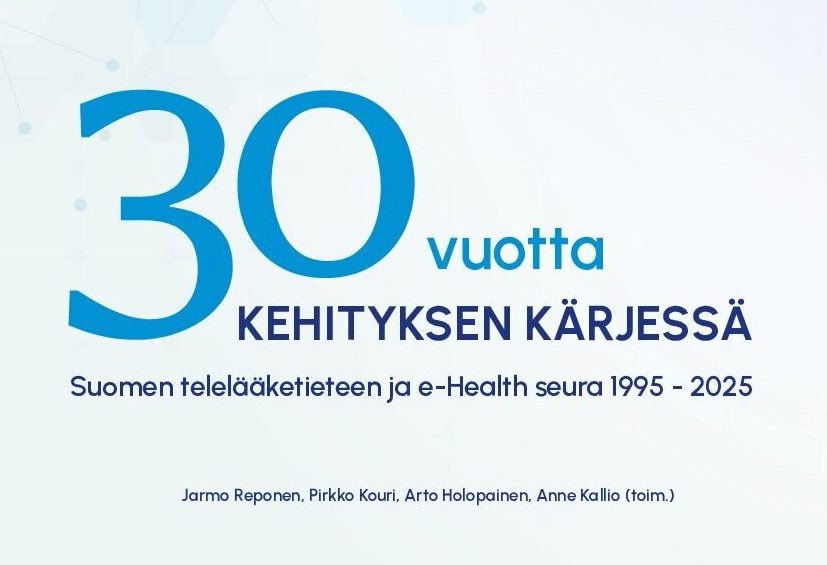
Seuran 30-vuotishistoriikki
30 VUOTTA KEHITYKSEN KÄRJESSÄ – Suomen telelääketieteen ja e-Health seura 1995-2025, 2025,
ISBN 978-952-65791-1-5 (PDF)
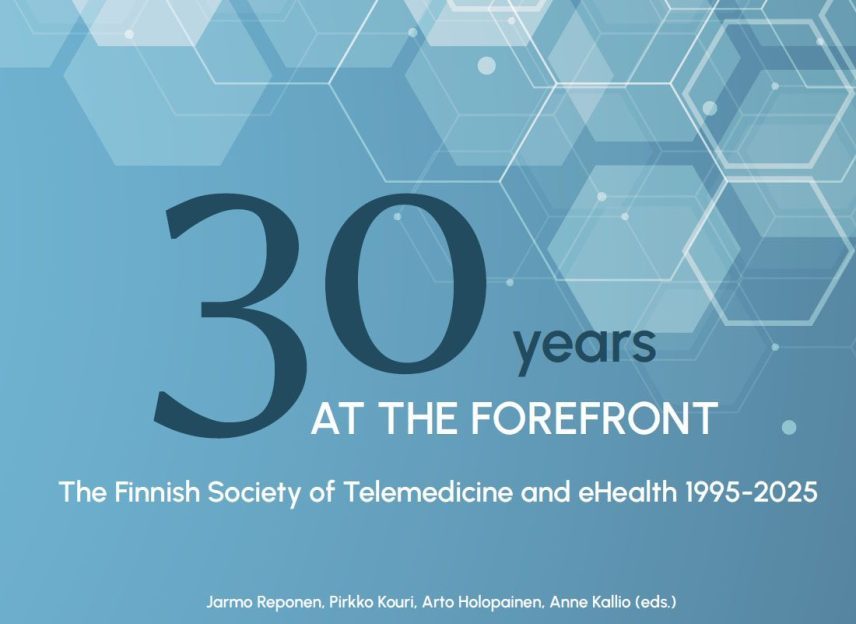
The Society’s 30-Year History
30 Years at the Forefront – The Finnish Society of Telemedicine and eHealth 1995-2025, 2025.
ISBN: 978-952-65791-5-3 (pdf)
Podcastit:
eHealth & Telemedicine Today – by STeHS
What’s happening in digital healthcare right now? In this podcast, STeHS brings you conversations on telemedicine, eHealth, and the evolving healthcare landscape—featuring voices from Finland and beyond.

Innovaatiot ja yrittäjyys suomalaisessa eHealthissa
This episode was recorded live at the eHealth2025 Conference, part of the 30th anniversary of the Finnish Society of Telemedicine and eHealth (STeHS). Hosts of this podcast are Titta Venho and Anna Saranlinna.In this discussion, Kalevi Virta, CEO of eWell Oy, and Arto Holopainen, Innovation Director at the City of Kuopio, share their perspectives on the development of the Finnish eHealth ecosystem, with a particular focus on innovation, entrepreneurship, and collaboration.The conversation explores how digital health has evolved in Finland over the past decades, highlighting key milestones such as mobile technologies, national digital health services, and international collaboration. The speakers reflect on the opportunities and challenges faced by startups and innovators in the health technology sector, including funding, regulation, and access to real-world testing environments.The episode also discusses the role of cities, ecosystems, and collaborative networks in supporting innovation, as well as the importance of early user engagement and cross-sector partnerships. Looking ahead, the discussion touches on future trends such as artificial intelligence, data-driven services, and the increasing demand for sustainable and scalable digital health solutions.Finally, the guests share practical advice for entrepreneurs and emphasize the need for stronger strategic leadership, long-term investment, and continued cooperation between public and private sectors to drive meaningful impact in healthcare.Note: This episode is in Finnish.Full transcript is available in https://www.telemedicine.fi/julkaisut/
Vaikuttavuus digitaalisissa terveyspalveluissa
This episode was recorded live at the eHealth2025 Conference, part of the 30th anniversary of the Finnish Society of Telemedicine and eHealth (STeHS). Hosts of this podcast are Titta Venho and Anna Saranlinna.In this discussion, Mika Perttu, Director of Digital Transformation at the City of Helsinki’s Social, Health and Rescue Division, and Minna Saranpää, Customer Manager and Social and Healthcare Specialist at Vivago Oy, explore the topic of impact and effectiveness in digital health and care services.As digitalisation continues to reshape how healthcare services are delivered, used, and evaluated, the conversation focuses on how to ensure that digital solutions truly create value for patients, professionals, and society. The speakers discuss how effectiveness can be defined, measured, and integrated into service development and decision-making.The episode highlights practical examples from both public and private sectors, addressing challenges such as fragmented systems, limited resources, and the need for better data-driven leadership. It also explores the future role of digital tools, including artificial intelligence and remote care, in improving outcomes and enabling more proactive and personalised healthcare services.Note: This episode is in Finnish.Full transcript is available: https://www.telemedicine.fi/julkaisut/
Women around the world in health care digitalisation
This episode was recorded live at the eHealth2025 Conference, part of the 30th anniversary of the Finnish Society of Telemedicine and eHealth (STeHS). Hosts of this podcast are Titta Venho and Anna Saranlinna.In this discussion, Dr Michelle Griffith, President of ISfTeH, a physician specializing in internal, lifestyle, and integrative medicine with over 30 years of clinical experience, and Professor Pirkko Kouri, Vice President of ISfTeH and a Finnish expert in health informatics and digital health education, explore the theme Women Around the World in Healthcare Digitalisation.Together, they reflect on how gender shapes the development, leadership, and use of digital health services across different cultural and global contexts. The conversation highlights both the challenges women face in technology-driven environments and the critical role they play in designing more inclusive, holistic healthcare solutions.The episode also offers insights into international collaboration, leadership experiences, and practical advice for women aiming to make an impact in the rapidly evolving field of telemedicine and eHealth.Full transcript will be available in: https://www.telemedicine.fi/julkaisut/
Jaksot päivittyvät tälle sivulle automaattisesti. Kaikki jaksot myös Spotifyssa.
Konferenssijulkaisut:
- XXXI Kansallinen ja kansainvälinen Telelääketieteen ja eHealth konferenssi, #eHealth2026: Effective digital solutions in health care and social welfare services, 2026, ISBN 978-952-65791-4-6 (PDF)
- XXX Kansallinen telelääketieteen ja eHealth seminaari, #eHealth2025: Strengthening Interoperability and Equality in Digital Health with Nordic Innovations, 2025, ISBN 978-952-65791-3-9 (PDF)
- XXIX Kansallinen telelääketieteen ja eHealth seminaari, #eHealth2024: From Research to Impact on Digital Health and Welfare Services, 2024, ISBN 978-952-69224-9-2 (PDF)
- XXVIII Kansallinen telelääketieteen ja eHealth seminaari, #eHealth2023: Human oriented approach in eHealth and digital services, 2023, ISBN 978-952-69224-8-5 (pdf)
- XXVII Kansallinen telelääketieteen ja eHealth seminaari, #eHealth2022: Digital Health – from Research to Applied Solutions, 2022, ISBN 978-952-69224-6-1 (PDF)
- XXVI Kansallinen telelääketieteen ja eHealth seminaari, #eHealth2021: eHealth in a Lifecycle, 2021, ISBN: 978-952-69224-4-7 (pdf)
- XXV Kansallinen telelääketieteen ja eHealth seminaari, eHealth2020: From Dream to Reality, 2020, ISBN: 978-952-69224-2-3 (pdf)
- XXIV Kansallinen telelääketieteen ja eHealth seminaari, eHealth2019: Data-Driven Health, 2019, ISBN: 978-952-68112-9-1 (pdf)
- XXIII Kansallinen telelääketieteen ja eHealth seminaari, eHealth2018: Health communities facing cyber transformation, 2018, ISBN: 978-952-68112-8-4 (pdf)
- XXII Kansallinen telelääketieteen ja eHealth seminaari: Win-Win-Win, voittaako kansalainen, ammattilainen ja yhteiskunta?, 2017, ISBN: 978-952-68112-6-0 (pdf)
- XXI Kansallinen telelääketieteen ja eHealth seminaari, Nordic eHealth2016 Kokeilukulttuuri ja digitalisaatio, 2016, ISBN: 978-952-68112-4-6 (pdf)
- XX Kansallinen telelääketieteen ja eHealth seminaari: eHealth, muutoksen moottori, 2015, ISBN: 978-952-68112-2-2 (pdf)
- XIX Kansallinen telelääketieteen ja eHealth seminaari: Matkalla vaikuttavaan eTerveyteen, 2014, ISBN: 978-952-67213-9-2 (pdf)
- XVIII Kansallinen telelääketieteen ja eHealth seminaari: Teknologiatalkoilla parempiin hoitotuloksiin, 2013, ISBN: 978-952-67213-8-5 (pdf)
- XVII Kansallinen telelääketieteen ja eHealth seminaari: Tietoa tarpeeseen, 2012, ISBN: 978-952-67213-6-1 (pdf)
- XVI Kansallinen telelääketieteen ja eHealth seminaari: Maalta maailmalle – Aluemalli terveyspalveluiden kehittämisessä, 2011, ISBN: 978-952-67213-4-7 (pdf)
- XV Kansallinen telelääketieteen ja eHealth seminaari: Katse yli rajojen, 2010, ISBN: 978-952-67213-2-3 (pdf)
- XIV Kansallinen telelääketieteen ja eHealth seminaari: Terveyttä verkosta ja verkostosta, 2009, ISBN: 978-952-67213-0-9 (pdf)
- XIII Kansallinen telelääketieteen ja eHealth seminaari: e-Health kansalaisen palveluksessa, 2008 (pdf)